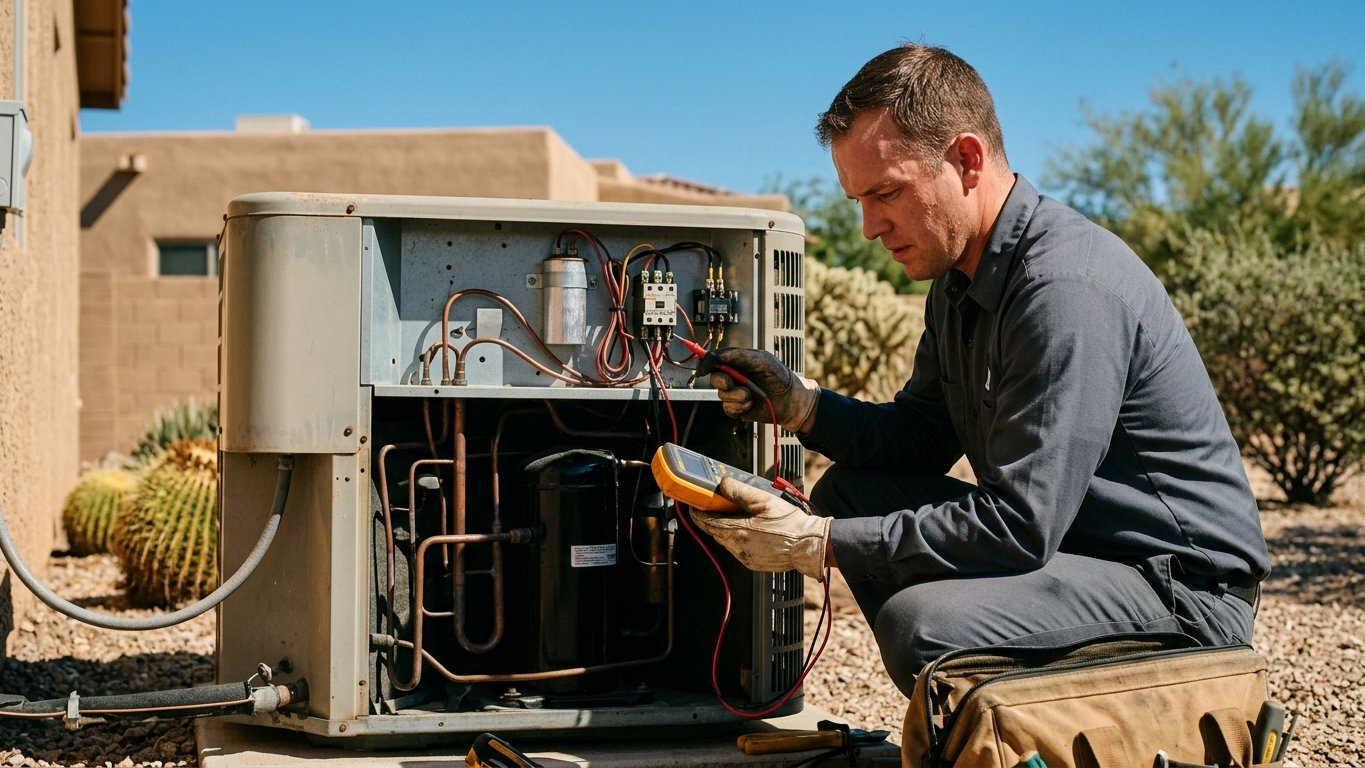
The compressor is the heart of your air conditioner. It pressurizes refrigerant and drives the entire cooling cycle, so when it struggles or quits, your home stops cooling no matter how hard the rest of the system tries. In Tucson, compressors live a hard life. They sit outdoors absorbing relentless summer sun, run for long stretches against triple-digit heat, and endure the electrical stress of starting under load again and again. That combination of heat and electrical strain is exactly what wears compressors down over time, and it is why a careful diagnosis matters before anyone talks about replacing one.
Common signs your compressor is in trouble
A failing compressor rarely dies without warning. The most recognizable symptom is a loud hum or buzz at the outdoor unit while the fan sits motionless, which often points to a start problem rather than a dead compressor. You might also notice the breaker tripping the moment the system tries to engage, warm air drifting from the vents while the unit appears to run, or a hard start where the equipment stutters and strains before it finally kicks on. Rising electric bills are another quiet clue, because a struggling compressor pulls more current to do less cooling. Any of these warrants a look before the failure cascades into something larger.
It helps to understand why these symptoms appear. The hardest moment in a compressor’s day is startup, when it has to overcome the pressure already built up in the system and get moving against that resistance. On a scorching Tucson afternoon those pressures run higher than usual, so a compressor that starts fine in mild weather can fail to start at the very moment you need it most. That is also why so many compressor calls cluster on the hottest days of the year. A unit that hums but will not turn, or one that trips the breaker only when the outdoor temperature peaks, is almost always telling you it lacks the starting torque to overcome heat-elevated pressures, which frequently means a supporting electrical part has weakened rather than the compressor having died outright.
How we diagnose compressor problems
Because so many compressor complaints are actually caused by inexpensive surrounding components, a methodical diagnosis protects you from paying for a part you do not need. Our technician confirms the system has power and the thermostat is calling for cooling, then checks the electrical components that fail most often in our heat: the run capacitor, the start components, the contactor, and the associated wiring. We measure the compressor’s electrical draw and check the windings for shorts or open circuits. Only after ruling out the cheaper culprits do we conclude the compressor itself has failed. This order of operations is the difference between a same-day fix and an unnecessary replacement quote, and it is the standard our Tucson AC repair specialists hold themselves to on every call.
Repairs that bring a compressor back to life
A surprising share of “dead compressor” calls end in a quick, affordable repair. A failed run capacitor cannot deliver the jolt the compressor needs to start, leaving it humming in place; replacing it often restores cooling in minutes. A hard-start kit can give an aging compressor the extra starting torque it needs to overcome the higher pressures common on hot afternoons. A burned or pitted contactor that no longer passes clean power gets swapped out, and damaged or corroded wiring is repaired so the compressor receives the voltage it expects. When the problem lives in these supporting parts, the compressor never needed replacing at all.
When compressor or full-system replacement is the honest answer
Sometimes the compressor genuinely is the failure point. Electrical shorts in the windings, a seized rotor, or internal mechanical damage cannot be repaired in place, and the choice becomes compressor replacement versus replacing the whole condensing unit or system. Several factors steer that decision: the age of the equipment, whether the compressor is still covered under a manufacturer parts warranty, the refrigerant type the system uses, and the overall condition of the rest of the components. Installing a new compressor in a worn, aging system can mean paying a large repair bill only to face another failure soon after. On a relatively young system with remaining warranty coverage, a compressor swap can be the right and economical move.
Knowing the common air conditioner problems that can mimic a failed compressor is exactly why a careful diagnosis comes before any major-repair quote.
We lay out the real numbers for both paths and never pressure a sale in a stressful moment.
How to protect your compressor going forward
Most compressor failures trace back to stress that built up quietly over seasons. A weak capacitor that forces hard starts, a dirty condenser coil that traps heat and raises operating pressures, low refrigerant from a slow leak, or restricted airflow all push the compressor to work harder and run hotter than it should. Keeping the outdoor coil clean, replacing filters on schedule, addressing refrigerant leaks promptly, and catching weak electrical parts during a seasonal tune-up all extend compressor life. After we restore your cooling, we point out anything trending toward trouble so you can handle it on your own schedule rather than during the next heat wave. In a climate this demanding, that kind of preventive attention is the surest way to keep the heart of your system beating for years.
Call us as soon as you suspect a compressor problem, and we will get you a clear diagnosis and an honest recommendation.