Choosing and installing an air conditioner is one of the most consequential home decisions a Tucson homeowner makes. The right system, sized and installed correctly, will cool comfortably and quietly on the hottest July afternoon while keeping electric bills in check for the next 12 to 15 years. The wrong one — oversized, mismatched, or fed by leaky ducts — struggles, short-cycles, and costs more to run from day one.
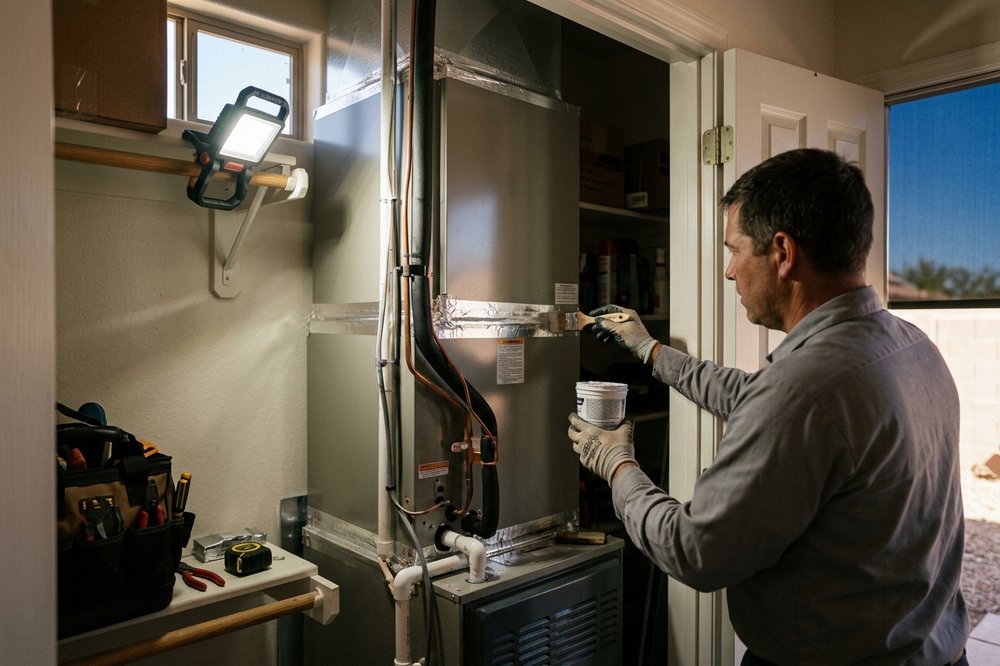
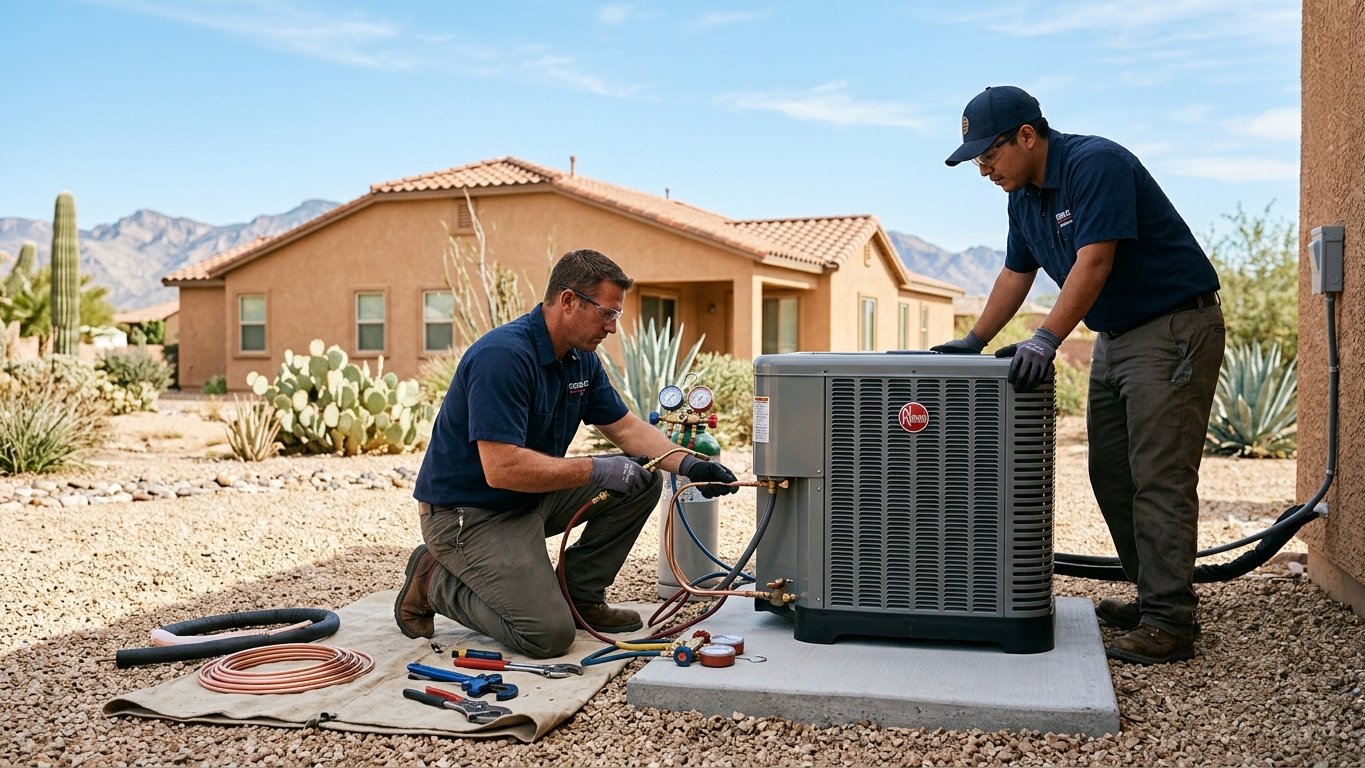
As a Tucson air conditioning contractor, we handle the full project: load calculation, equipment selection, removal of the old system, installation of the new condenser and air handler, refrigerant charging, and a verification run to confirm the system performs to spec before we leave.
Sizing for Tucson, not a rule of thumb
Bigger is not better with air conditioning. An oversized unit cools the air quickly but shuts off before it has run long enough to pull humidity out and even the temperature room to room — leaving hot spots and a clammy feel during monsoon season. We base every recommendation on a proper load calculation. The Department of Energy’s guidance on central air conditioning describes why matched, correctly sized equipment outperforms a larger unit that cycles too quickly.
Central air, heat pumps, and ductless options
Most Tucson installations are split-system central air conditioners or heat pumps. Where a home has no existing ductwork — a casita, a converted garage, an older block house, or a room addition — a ductless mini-split is often the smarter, more efficient choice because it skips the duct losses that plague attic ductwork in our climate. We walk you through the trade-offs in plain language so the choice fits your home and budget.
Efficiency that actually returns its cost here
Because our cooling season is so long, the efficiency tier you choose has an outsized effect on lifetime cost. A more efficient system carries a higher sticker price but recovers it over thousands of runtime hours that a Tucson summer guarantees. We show you the modeled energy difference, available utility rebates, and the honest payback period — then let you decide.
Browse the installation and replacement services below, or call to schedule a free in-home assessment.