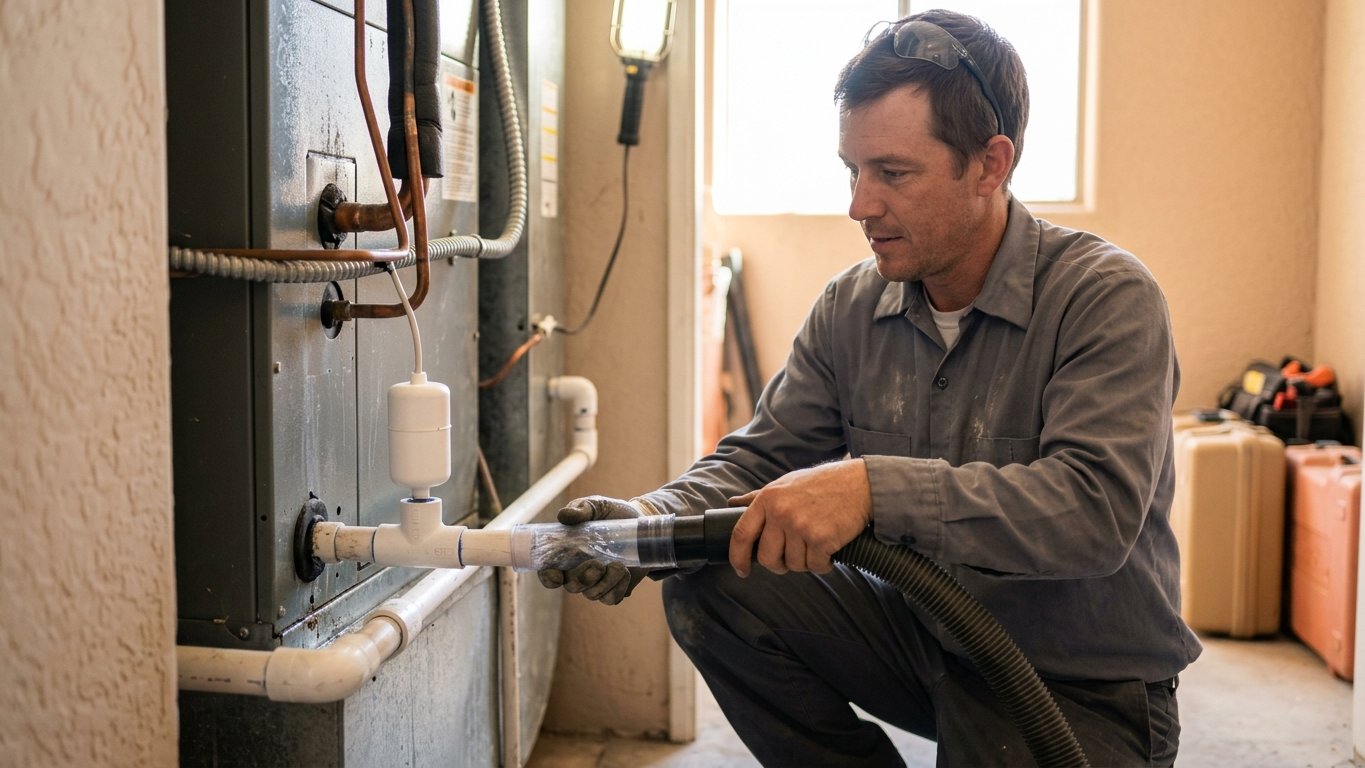
The condensate drain line is one of the least glamorous parts of your air conditioner and one of the most common to cause trouble. As your system cools your home, it pulls moisture out of the air, and that water has to drain away. When the line that carries it off becomes clogged, the consequences range from a silent shutdown to an overflow that soaks drywall, insulation, and ceilings. In Tucson, where systems run for hundreds of hours through a long cooling season, drain clogs are routine — and easy to clear once you know the signs to watch for.
How a condensate drain clogs
Inside the air handler, the evaporator coil sweats as it cools the air, and that condensation drips into a pan and out through the drain line. The line stays damp and dark, which is an ideal environment for algae and mold to grow. Add Tucson’s ever-present fine dust, which settles on the wet coil and washes down with the condensate, and you have the recipe for a slow buildup of sludge that eventually hardens into a blockage. It does not happen overnight; it accumulates over weeks and months of runtime until the line can no longer carry water away fast enough, and the backup begins.
The signs of a clogged drain line
A drain problem announces itself in a few recognizable ways. The most obvious is water pooling around the indoor air handler or staining a ceiling beneath an attic unit. Many systems also include a float safety switch on the drain, and when water backs up far enough, that switch shuts the entire system off to prevent an overflow — so an AC that suddenly stops cooling with no other apparent cause is a classic symptom of a clogged drain. A persistent musty or mildew odor from the vents is another tell, signaling standing water and biological growth in the line or pan. Any of these warrants a look before a slow clog turns into active water damage.
Why a clog turns into water damage
The float safety switch is your first line of defense, but not every system has one, and not every switch works perfectly. When the drain backs up and there is nothing to stop it, the condensate pan overflows. Depending on where your air handler sits, that water can run down through ceilings, soak insulation, warp flooring, and create exactly the kind of moisture conditions that breed mold. A repair that would have been a simple drain flush becomes a water-damage cleanup. That is why we treat drain maintenance as preventive work rather than something to address only after the ceiling is stained.
The location of the equipment shapes how much damage a clog can do. An air handler in the attic sits directly above your living space, so an overflow there travels straight down through the ceiling and can ruin drywall, light fixtures, and anything below before anyone notices. Units in a closet or garage are more forgiving, but standing water in a condensate pan still feeds mold and corrodes the metal pan and surrounding components over time. In every case, the moisture problem compounds the longer it sits, and Arizona’s monsoon humidity in late summer only accelerates the biological growth. Catching the clog early is what keeps a five-minute flush from becoming a restoration project. Clearing and flushing the line is also covered in the same routine our Tucson air conditioning repair and service team performs during seasonal maintenance.
How we clear and flush the line
Our technician locates the access point on the drain line and clears the blockage, typically by applying suction to pull the clog and accumulated sludge out of the pipe, then flushing the line to confirm it runs freely end to end. We check and clean the condensate pan, inspect and test the float safety switch so it protects the system properly, and confirm the slope of the line allows water to drain by gravity as designed. Where it helps, we treat the line to slow the regrowth of algae. The Department of Energy’s guidance on clearing AC condensate drain channels describes the same passages and buildup that our cleaning addresses.
Preventing the next clog
Drain clogs are among the most preventable AC failures, because the fix is mostly about staying ahead of buildup. Periodic flushing during seasonal service keeps the line clear before sludge has a chance to harden, and keeping the evaporator coil clean reduces how much dust and debris washes into the drain in the first place. In Tucson, where dust is a constant factor, that coil cleaning matters more than in wetter, cleaner climates. A working float safety switch is the backstop that protects against overflow if a clog ever does form, so we verify it on every visit. Between professional service, keeping fresh air filters in place reduces the dust load on the whole system, including the drain.
Call if your system has shut off unexpectedly or you have spotted water near the air handler — clearing a clogged drain early is far cheaper than repairing water damage.