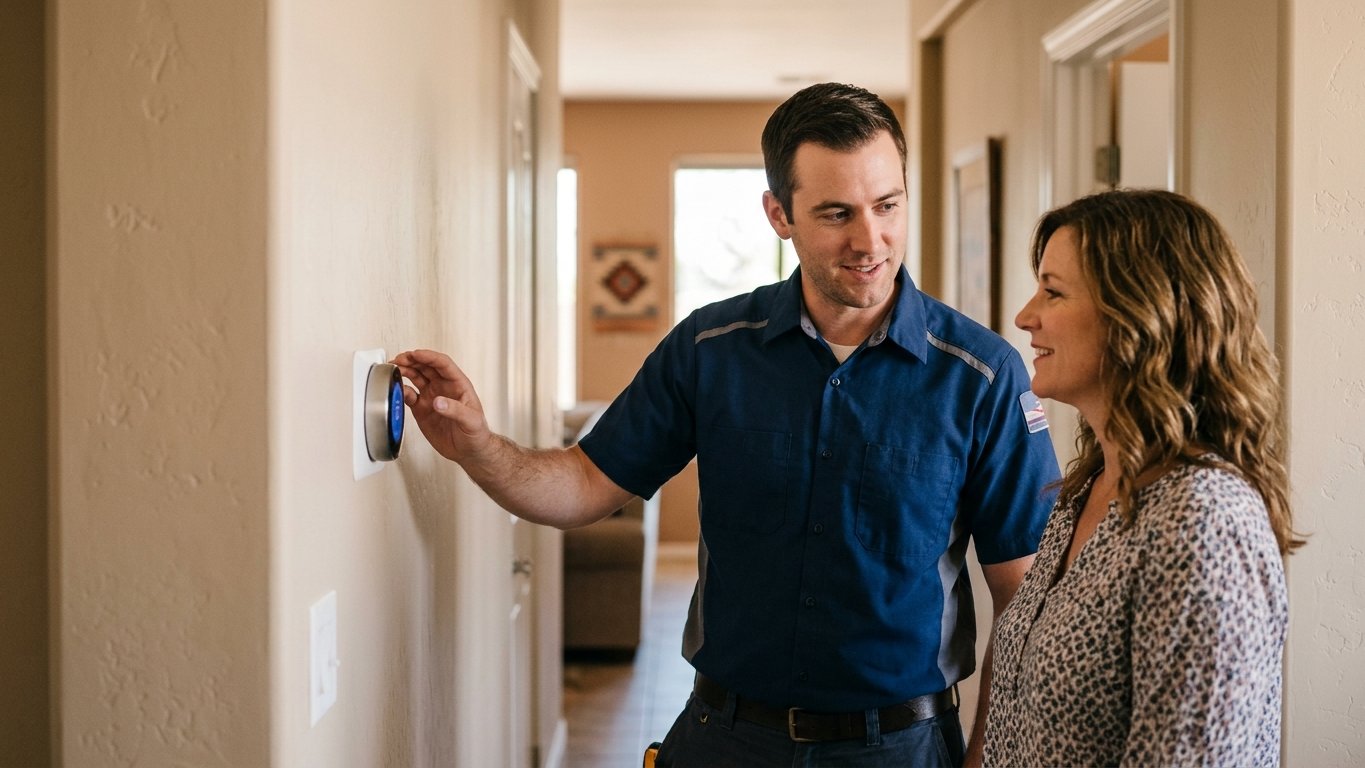
Few things are more frustrating than an air conditioner that runs and runs while the house keeps getting warmer. In Tucson, it is also genuinely risky, because indoor temperatures climb quickly once the cooling falls behind. The good news is that “running but not cooling” almost always traces back to a defined list of causes, and a systematic diagnosis works through them in order rather than guessing. Our job is to find exactly where the chain breaks — airflow, refrigerant, electrical, or capacity — and tell you plainly what it will take to fix it.
What “running but not cooling” usually means
When the system is clearly powered and the fan is moving air, but the air is not cold or the house will not hold temperature, the culprit is one of a handful of common faults. A dirty filter or coil chokes airflow so the system cannot move heat. Low refrigerant from a leak means there is too little of the working fluid to absorb heat indoors. A frozen evaporator coil blocks airflow entirely behind a wall of ice. A failing capacitor or compressor leaves the system running without producing real cooling. Leaky ducts dump conditioned air into the attic instead of your rooms. And on the most extreme Tucson afternoons, an undersized or aging unit can simply lose ground against the load even when nothing is technically broken. The Department of Energy’s overview of common reasons an AC stops cooling covers many of these same failure points.
Quick checks you can do first
A few homeowner checks rule out the easy stuff and sometimes solve the problem outright. Confirm the thermostat is set to “cool” and a few degrees below the current room temperature, and replace the battery if the display is dim. Check the air filter — a filter packed with desert dust is one of the most frequent causes of weak cooling. Step outside and make sure the condenser unit is not buried in leaves, dust, or overgrowth blocking airflow. If you find the indoor coil or the refrigerant line iced over, switch the system off and let it thaw completely before running it again. If none of that restores cooling, it is time for a professional diagnosis rather than continued running.
How we diagnose it methodically
A proper diagnosis follows the path of the cooling cycle instead of jumping to conclusions. We start at the thermostat and controls, then measure airflow to catch filter and coil restrictions, and inspect the evaporator for ice. We check the refrigerant charge and look for the telltale signs of a leak, since simply “topping off” a leaking system is a temporary fix that masks the real problem. We test the capacitor and read the compressor’s electrical performance under load, and we look at the ductwork when conditioned air seems to be vanishing before it reaches the rooms. Each step either clears a cause or confirms it, so by the end we know the actual reason — not a guess. If you want same-day AC repair in Tucson, our same-day AC repair in Tucson crew can often diagnose and fix the issue in a single visit.
When to stop running it and call
Continuing to run a system that is not cooling can turn a small repair into a large one. A unit fighting a frozen coil can damage the compressor, which is by far the most expensive part of the system to replace. A system low on refrigerant runs hot and stresses every component, and a compressor straining without enough refrigerant can fail outright. If your home is already warm and getting warmer, if anyone inside is vulnerable to heat, or if you see ice on the lines or smell anything burning, shut the system off and call. Moving to the coolest room, closing blinds against the sun, and staying hydrated keeps you safer while help is on the way. In our climate, waiting days for a routine appointment with no cooling is not a reasonable option, and the longer a failing system runs, the more likely a modest repair becomes a major one.
Verifying the home actually cools again
Restoring cooling is only half the job; confirming it holds is the other half. After the repair, we measure the temperature drop across the system to verify it is removing heat correctly, watch the unit complete a full cooling cycle, and confirm the house is trending toward the thermostat setpoint rather than just blowing cooler air briefly. A healthy system should pull the supply air meaningfully below the return air, and measuring that split is the most reliable way to prove the fix worked rather than relying on a vent that merely feels cooler. We also identify anything that contributed to the failure — a marginal capacitor, a coil overdue for cleaning, or ducts losing air — so you can address the root cause and not just the symptom. The goal is a system that cools reliably through the next heat wave, not one that limps along until the next breakdown.
Call when your AC is running but losing the battle against the heat — the sooner we diagnose it, the smaller the repair is likely to be.