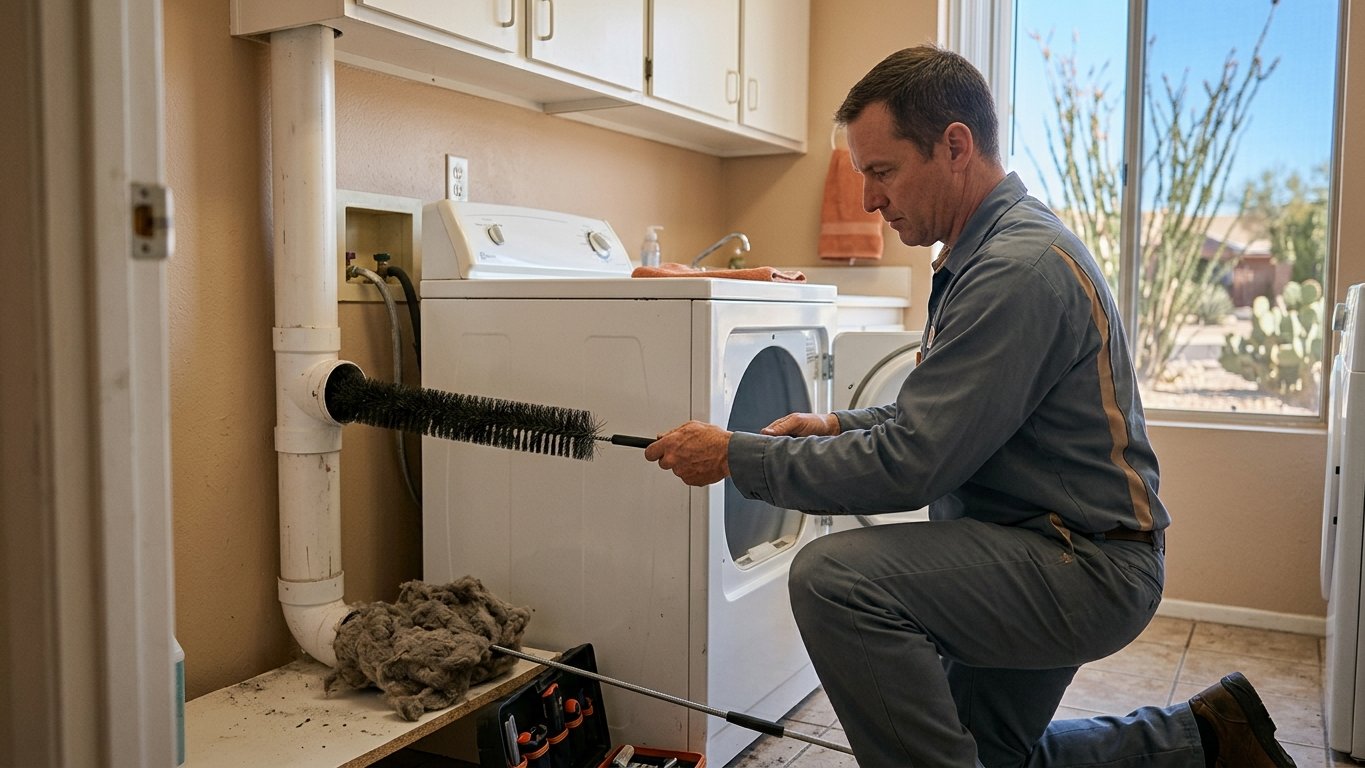
Your dryer pushes a lot of hot, moist, lint-laden air through its vent every time it runs, and over time that lint builds up along the entire length of the duct. A clogged dryer vent is not just an inconvenience that leaves clothes damp — it is a genuine safety issue, because lint is highly flammable and a restricted vent traps heat and fuel together. Clearing the full vent run restores airflow, shortens drying times, and removes the buildup that creates risk.
We clean the whole vent, not just the part you can see. The lint trap is your job between loads; the duct that runs through your wall, attic, or roof is ours.
Why lint buildup is a fire risk
Dryer lint is essentially fine, dry fiber — exactly the kind of material that ignites easily. When the vent is clear, the dryer expels that lint and the heat that comes with it. When the vent is clogged, both stay trapped in the system. The dryer runs hotter and longer to dry the same load, and that combination of accumulated flammable lint and elevated heat is what makes a blocked vent a leading, and largely preventable, cause of home fires. Clearing the duct removes the fuel and lets the heat escape the way the system was designed to.
The Department of Energy’s laundry guidance recommends inspecting your dryer vent to save energy and prevent fires, because a blocked vent traps both the lint and the heat that fuel a fire.
The signs your dryer vent is clogged
The most common complaint is laundry that is still damp after a full cycle, or that now takes two cycles to dry. Beyond that, watch for a dryer and laundry room that feel unusually hot during operation, a burning or musty smell, lint collecting around the back of the dryer or the exterior vent hood, and an outside vent flap that no longer opens freely when the dryer runs. The longer drying times alone are worth acting on — a dryer fighting a restricted vent wastes energy and wears out faster, on top of the safety concern.
How we clear the full vent run
Cleaning the lint trap does nothing for the duct behind the wall, which is where the dangerous buildup lives. We disconnect the dryer and clean the vent along its entire length using rotary brushes that flex through bends and elbows, paired with compressed air or vacuum to capture the lint as it loosens. We clear the transition hose at the dryer, the duct through the wall, attic, or roof, and the exterior vent hood and its flap. Then we confirm strong, unobstructed airflow at the outside termination so we know the whole run is open — not just the first few feet.
What Tucson conditions add to the problem
Desert homes face a couple of extra wrinkles. Blown dust and grit can work into the vent from the outside, mixing with lint to form a denser clog than lint alone. Exterior vent hoods are also a favorite spot for birds and insects to nest, and a blocked or screened-over termination chokes the entire run. We check the outside hood as carefully as the duct itself, because a vent that is perfectly clean inside still fails if its exit is plugged. Dryer vent cleaning is part of our broader duct and vent services in Tucson, so we can look at the whole picture when something else is contributing.
Keeping the vent clear between visits
A few habits stretch the time between cleanings and keep the system safe. Clean the lint trap before or after every load, and never run the dryer without it. Check the outside vent hood now and then to confirm the flap opens with airflow and is not blocked by debris or a nest. Avoid overloading the dryer, which forces more lint through the vent per cycle, and pay attention to drying times — a load that suddenly needs longer is the earliest warning that lint is collecting again. When that warning shows up, it is time for another full clearing.
Call to schedule a full dryer vent cleaning and get your laundry drying — and your home safer — in a single cycle again.