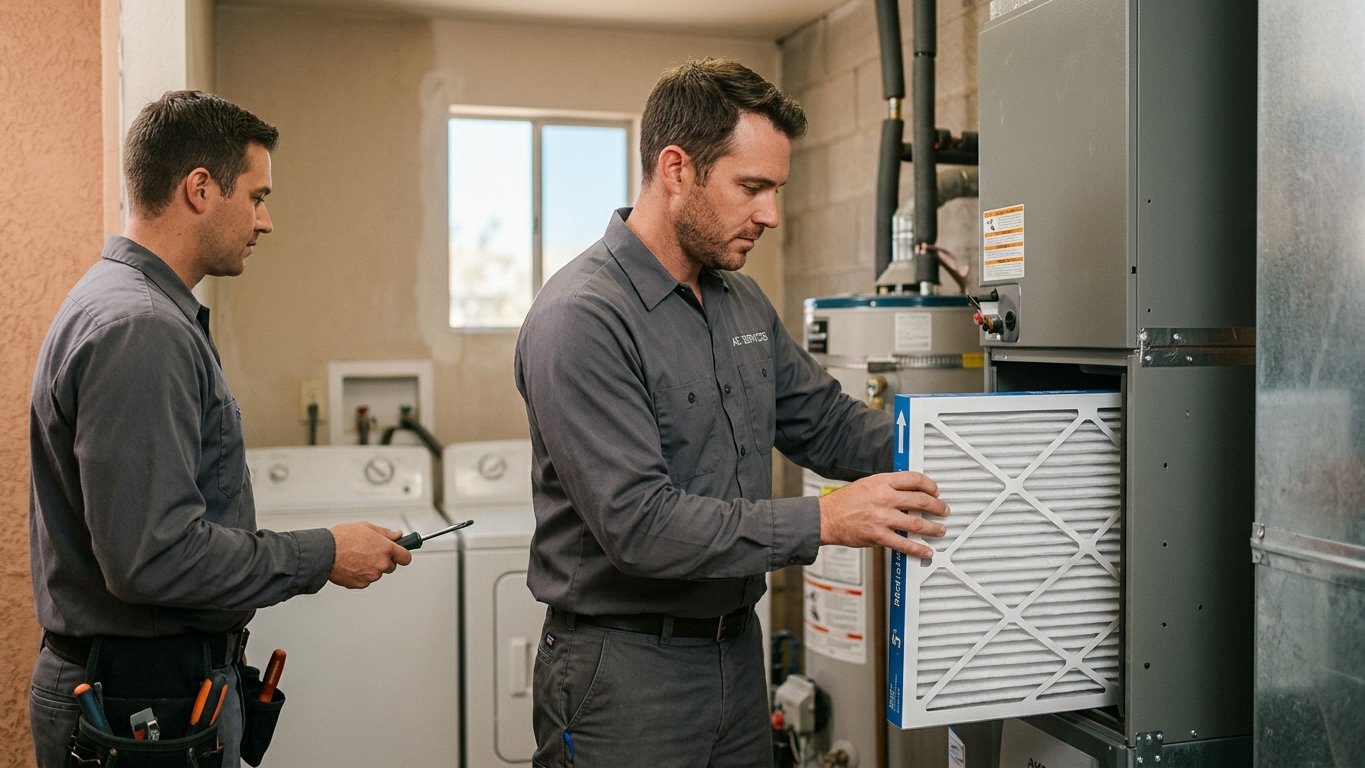
The air inside a Tucson home carries whatever the desert sends its way — fine dust, seasonal pollen, and the dry particulate that our low humidity keeps suspended far longer than a humid climate would. Add a tightly built home that recirculates the same air through the HVAC system all summer, and indoor air quality becomes a comfort and health issue worth taking seriously. Our indoor air quality work focuses on practical, proven improvements rather than gadgets you do not need.
Start with the three things that actually work
Cleaner indoor air comes from a simple hierarchy, and we follow it in order. First, control the source: seal the gaps and leaky return ducts that pull dust straight into the system. Second, ventilate so stale, particle-laden air is diluted with filtered fresh air. Third, filter what circulates. The EPA’s steps to improve indoor air quality lay out this same source-control, ventilation, and filtration approach, and it consistently delivers more than chasing a single miracle device.
Filtration sized to your system
A higher-rated filter only helps if your blower can move air through it — otherwise it starves the system and can freeze the coil. We match filter type and rating to your equipment, whether that means a better one-inch filter changed on schedule or a deep media cabinet that captures more without choking airflow. For dust-heavy Tucson homes, a properly sized media filter is often the single most effective upgrade.
Sealing the path dust travels
Much of the dust in a home rides in through leaky return ducts and unsealed register boots, especially when those runs pass through a dusty attic. Tightening the return side of the system means the air your filter sees is the air you actually want to clean, not unfiltered attic dust sneaking in downstream. This is where duct and air-quality work overlap, and it is a core part of our Tucson air quality and duct cleaning services.
Humidity and ventilation in a dry climate
Tucson’s dryness is usually the opposite of a mold-prone humid climate, but balance still matters. During monsoon season, indoor humidity can climb; the rest of the year, very dry air aggravates skin, sinuses, and dust. Balanced ventilation — and, where it fits, humidity management — keeps the home comfortable without inviting moisture problems. We tailor any recommendation to how your specific home behaves across the seasons.
Honest recommendations, not an upsell
Indoor air quality is an area where it is easy to oversell equipment. We do the opposite: we look at your home, identify where dust and pollutants actually enter and circulate, and recommend the smallest set of changes that will make a real difference. If filtration and sealing solve the problem, that is what we will tell you — no unnecessary add-ons.
Call to schedule an indoor air quality assessment for your Tucson home.