The condenser is the outdoor unit of your air conditioning system, and it has the toughest job in the harshest conditions. Its role is to release the heat your system pulls out of your home, which means it has to shed warmth into air that, on a Tucson summer afternoon, is already well over 100 degrees. On top of that, it stands fully exposed to direct sun, blowing dust, and the occasional monsoon storm. That relentless exposure is why outdoor units accumulate wear and why the components inside them are common points of failure during the cooling season. When the condenser struggles, your whole system loses its ability to cool, regardless of how well the indoor equipment is working.
What goes wrong with outdoor condensers
A handful of failures account for most condenser service calls. The condenser fan motor, which drives air across the coil to carry heat away, can wear out or seize, leaving the unit unable to reject heat. The contactor, an electrical switch that energizes the unit when cooling is called for, can become burned or pitted until it no longer passes clean power. The capacitor that starts the fan and compressor degrades quickly in the heat. The condenser coil itself can clog with dust and debris until it can no longer transfer heat efficiently. And the unit can take physical damage from sun exposure, hail, or wind-driven debris during a storm. Because several of these produce similar symptoms, such as an outdoor unit that runs without cooling the home, a careful diagnosis is what separates a real fix from a guess.
Dust-clogged coils and the airflow problem
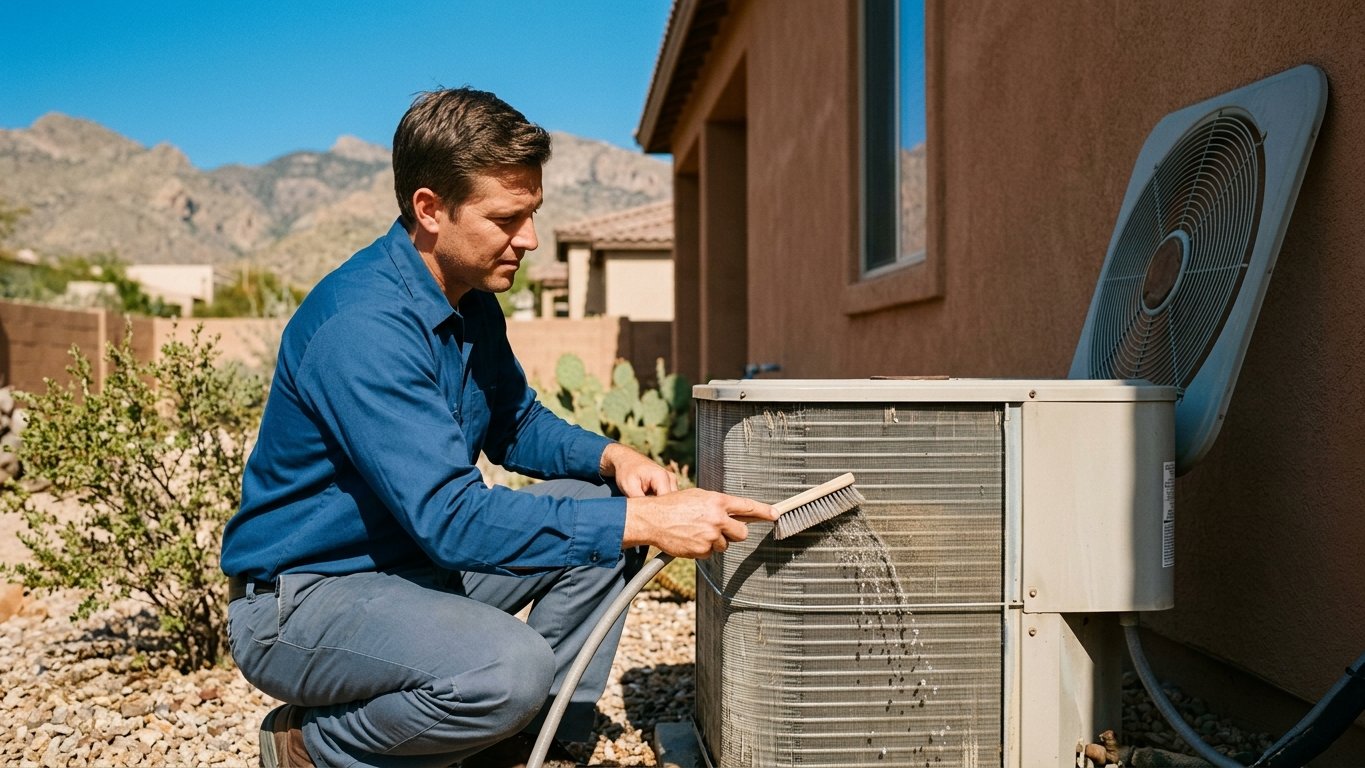
Airflow is everything for a condenser, and Tucson’s dust is constantly working against it. The condenser coil wraps around the outside of the unit, and air must flow freely across those fins for the system to dump heat. Over a season, fine desert dust, cottonwood fluff, grass clippings, and grime cake onto the coil and pack between the fins, forming an insulating blanket that traps heat against the unit. A clogged coil forces the system to run hotter and longer to achieve less cooling, drives up energy bills, and raises operating pressures that strain the compressor. Bent fins from weed trimmers or debris compound the problem by physically blocking airflow. Keeping that coil clean is one of the single most impactful things you can do for an outdoor unit in our climate, and the Department of Energy’s guidance on outdoor condenser coil care explains why regular cleaning is so important to efficiency.
Foliage, clearance, and what surrounds the unit
What grows and accumulates around your condenser matters as much as what is inside it. Manufacturers typically call for keeping at least two feet of clear space on all sides of the outdoor unit, plus generous clearance overhead, free of shrubs, vines, fences, and stored belongings. When plants crowd the unit or a privacy screen boxes it in, the condenser cannot draw in enough air, and it recirculates its own hot exhaust instead of pulling in cooler air, which sharply reduces its ability to reject heat. Pollen, seeds, and leaves from nearby plants also get pulled into the coil and accelerate clogging. Trimming back growth, clearing away clutter, and resisting the urge to hide the unit behind tight landscaping are free steps that meaningfully improve performance and lifespan.
How we repair the outdoor unit
When our technician arrives, the diagnosis comes first. We confirm the unit is getting power and a cooling call, then check the components that fail most often: we test the capacitor and contactor, inspect the fan motor for wear and proper operation, examine the coil for clogging and fin damage, and check the refrigerant charge for signs of a leak. From there the repair follows the finding. A failed fan motor or contactor is replaced, a weak capacitor is swapped, and a dirty coil is cleaned to restore airflow and heat rejection. When damage is severe or an aging unit faces a major component failure, we lay out the repair-versus-replace tradeoff honestly so you can make an informed choice. Condenser work is one piece of the complete AC repair in Tucson we provide, and our goal on every call is the fix that genuinely restores reliable cooling.
Protecting your condenser through the seasons
Most condenser failures are the cumulative result of stress that preventive care would relieve. Rinsing the coil clean, keeping a clear perimeter around the unit, replacing weak capacitors before they quit, and addressing refrigerant leaks early all reduce the heat and electrical strain the unit endures. A seasonal tune-up that cleans the coil, tests the electrical components, and checks the charge catches developing problems before they leave you without cooling on a triple-digit day. Given how hard the outdoor unit works in our climate, that routine attention is the most cost-effective way to extend its life and keep your home comfortable through the long Tucson summer.
Call us if your outdoor unit is running without cooling, has gone silent, or sounds wrong, and we will diagnose it and get your system back to work.