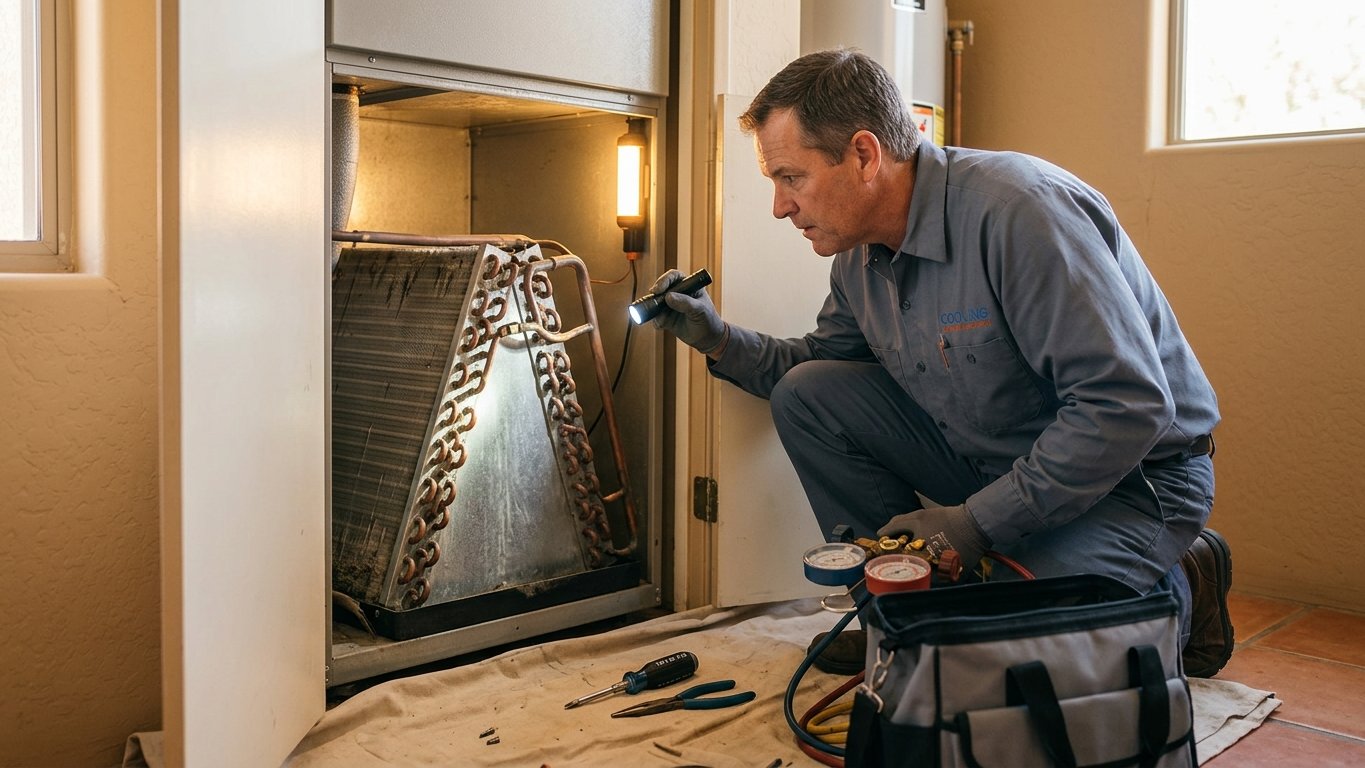
Your evaporator coil is the indoor half of the cooling process, tucked inside the air handler or above the furnace where you rarely see it. As warm household air passes across this coil, the cold refrigerant inside absorbs the heat, and the cooled air is sent back through your ducts. When the coil is dirty, frozen, or leaking, that heat exchange falters, and the result is weak cooling, poor airflow, and a system that runs and runs without ever satisfying the thermostat. Because the coil sits out of sight, problems here often go unnoticed until cooling drops off noticeably, so a proper diagnosis is the first order of business.
Why evaporator coils freeze
A frozen coil is the most common evaporator complaint, and it is almost always a symptom of something upstream rather than a problem with the coil itself. The coil freezes when its surface temperature drops below freezing and moisture from the air condenses and freezes onto the fins. Two causes dominate. The first is restricted airflow, most often from a clogged air filter, closed or blocked supply vents, or a dirty blower, which starves the coil of the warm air it needs to stay above freezing. The second is low refrigerant from a leak, which drops the coil’s temperature too far. Either way, ice builds across the coil, blocks airflow entirely, and the system effectively cools nothing. The critical thing to understand is that running the system in this state is harmful, because the compressor is left fighting ice and abnormal pressures.
Dust, airflow, and the Tucson factor
Tucson’s dusty, dry environment puts unusual stress on the indoor coil and the airflow that keeps it healthy. Fine desert dust loads up filters faster than in many climates, and that dust also settles onto the coil fins themselves over time, forming an insulating layer that blocks heat transfer and traps moisture. A dirty coil cannot absorb heat efficiently, which both weakens cooling and makes freezing more likely. Long cooling seasons mean the system runs for months on end, so a filter that would last a season elsewhere can clog far sooner here. Staying ahead of filter changes and keeping the coil clean are two of the most effective things you can do to protect indoor cooling performance in our climate, and the Department of Energy’s guidance on evaporator coil maintenance reinforces how much regular cleaning matters.
Corrosion and formicary leaks
Beyond freezing, evaporator coils are prone to refrigerant leaks, and these can be especially frustrating because of how they form. The thin copper tubing can develop corrosion over years of service, and many coils suffer from formicary corrosion, a pattern of microscopic pinhole leaks that resemble tiny ant tunnels and tend to appear across the coil rather than at a single spot. Because these leaks are so small and so numerous, chasing and patching them individually is often impractical and short-lived. A leaking coil shows up as gradual cooling loss as the refrigerant charge drops, sometimes alongside the freezing symptoms a low charge produces. Identifying whether you have one repairable leak or a coil riddled with formicary corrosion is central to recommending a fix that actually lasts.
These leaks are deceptive because they unfold so slowly. A coil losing charge through tiny pinholes may cool acceptably for a while, then gradually fall behind on the hottest days as the charge thins, leaving you to wonder whether the system is simply undersized for the heat. That is why we confirm a leak by measurement rather than assumption, and why we resist the temptation to just add refrigerant and move on. Pouring a fresh charge into a coil that is quietly leaking only buys a few weeks of relief before the same symptoms return, so understanding the true condition of the coil is what allows an honest recommendation.
Cleaning, repair, or replacement
The right intervention depends entirely on what the diagnosis reveals, and our work begins by determining the true condition of the coil. When the trouble is dirt and restricted airflow, a thorough coil cleaning and a fresh filter often restore full performance, and we address whatever choked the airflow in the first place. When a single, accessible leak is the issue, a targeted repair and recharge to spec can bring the system back. When the coil is corroded throughout or carries widespread formicary leaks, or when it sits in an older system, coil replacement is the durable answer rather than a repair destined to fail again within a season. We walk you through what we found and recommend the path that holds up. The same honest, diagnosis-first approach guides all of our Tucson cooling repair services, because guessing on a coil wastes your money and your comfort.
Keeping your coil healthy
Most evaporator problems are preventable with attention to airflow and cleanliness. Replace your filter on a regular schedule, more often during the heavy cooling months and in dusty conditions, and use the correct filter so you do not unintentionally restrict airflow. Keep supply and return vents open and unobstructed so the coil receives the air it needs. Schedule a seasonal tune-up that includes inspecting and cleaning the coil and checking the refrigerant charge, which catches both the dust buildup that leads to freezing and the early signs of a leak before they strand you. A clean, properly charged coil with good airflow cools efficiently, resists freezing, and spares your compressor the strain that turns a minor coil issue into a major repair.
Call us if your cooling has weakened or you suspect a frozen or leaking coil, and we will diagnose the real cause and fix it right.