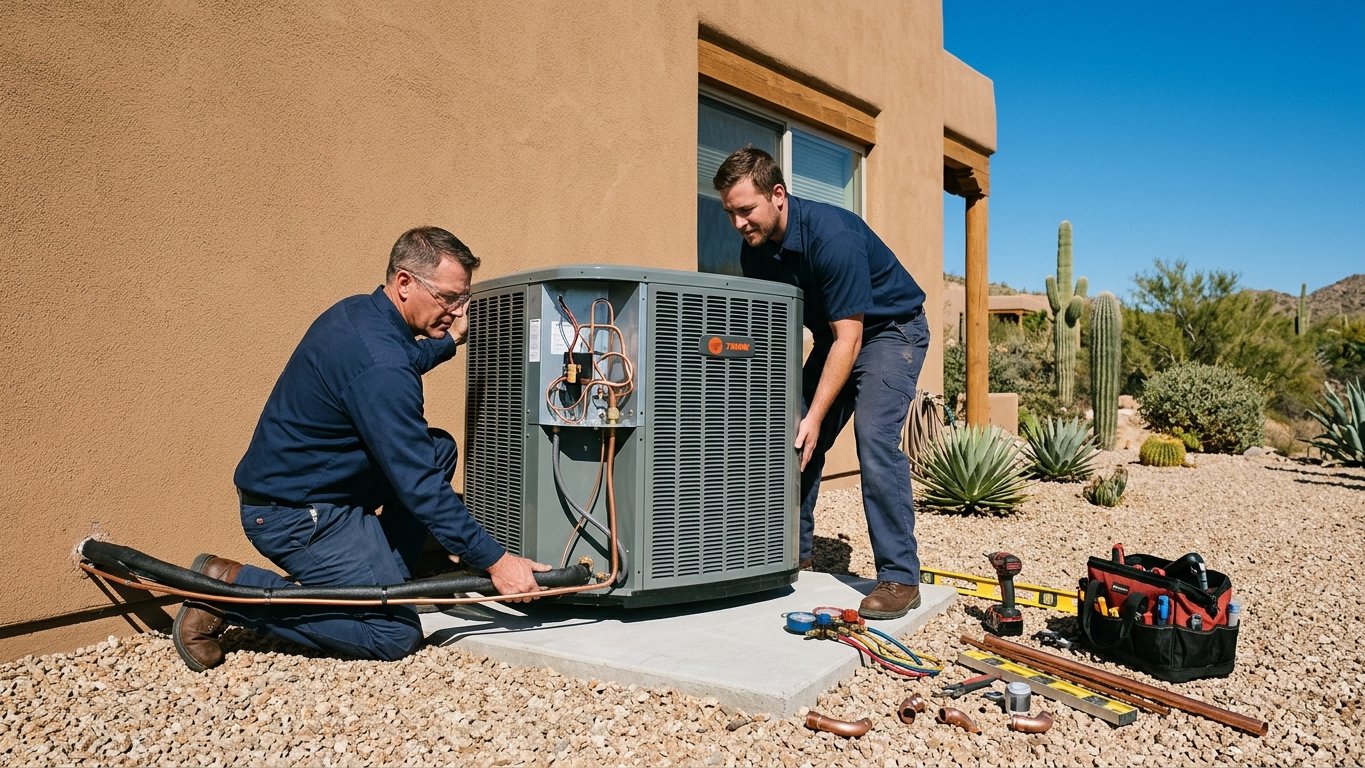
A heat pump is one of the most sensible comfort systems for a Tucson home because it does two jobs with one piece of equipment: it cools through our long, punishing summers and heats through the valley’s mild winters. Instead of buying and maintaining a separate air conditioner and furnace, you install a single system that reverses its refrigerant flow to deliver whichever you need. We install heat pumps sized and matched to your specific home, not to whatever happened to be there before.
Why heat pumps fit Tucson’s climate
Tucson winters rarely drop and stay near freezing, which is exactly the condition where heat pumps work best. A heat pump moves heat rather than burning fuel to create it, so in a mild-winter climate it heats efficiently for a fraction of the energy a resistance heater would use. The Department of Energy explains how air-source heat pumps work by transferring heat between your home and the outside air in both directions. The same components that cool your house in July simply run in reverse to warm it in January, which is why a single system covers the whole year here.
Sizing the system to your home, not the old unit
The most important decision in any installation happens before the equipment is ordered: getting the size right. We perform a load calculation that accounts for your home’s square footage, insulation, window area and orientation, ceiling height, and air leakage. An oversized heat pump cools the air quickly but shuts off before it removes humidity and evens out temperatures, then short-cycles in a way that wears parts and wastes power. An undersized unit runs constantly during a Tucson heat wave and still struggles to keep up. Matching the equipment to the calculated load is what delivers comfort and efficiency at the same time.
Choosing the right efficiency and features
Heat pumps range from single-stage units to two-stage and variable-speed systems. A variable-speed compressor can run at low output for long, quiet stretches during milder weather and ramp up only when the afternoon heat demands it, which improves both comfort and energy use across a long cooling season. Higher-efficiency systems cost more upfront and use less energy over their life, so the right choice depends on how long you plan to stay in the home and how many hours the system will run each year. Utility and federal incentives may be available for qualifying high-efficiency equipment; we point you to current programs rather than promising specific amounts.
What the installation process looks like
A clean installation is what makes the equipment perform as designed. We confirm the load calculation, then remove the old system and inspect the ductwork, line set, and electrical connections that the new heat pump will rely on. We set the outdoor and indoor units, make the refrigerant and electrical connections, pull a proper vacuum on the lines, weigh in the correct refrigerant charge, and verify airflow and temperature split before we leave. Heat pump installation is one part of our broader Tucson HVAC installation services, so if your project also involves duct repairs or a thermostat upgrade, the same team handles it in one coordinated visit.
Pairing cooling and heating in a single system
The real advantage of a heat pump is integration. Because one outdoor unit and one indoor air handler deliver both cooling and heating, you have fewer components to maintain, one system to service, and one set of controls to manage. A properly matched indoor and outdoor pair — sized together rather than mixed from leftover parts — runs more efficiently and lasts longer than a mismatched system. We commission the finished installation so the cooling and heating modes both hit their targets, the defrost cycle behaves correctly, and the thermostat communicates properly with the equipment.
Verifying performance before we call it done
An installation is not finished when the unit turns on. We measure the temperature split across the coil, confirm refrigerant charge by the manufacturer’s method, check airflow at the registers, and test the changeover between heating and cooling so you know both modes work before the first hot or cold day arrives. We also walk you through the thermostat settings and the basic maintenance that protects your warranty and keeps the system efficient through Tucson’s demanding cooling season.
A heat pump installed correctly still depends on basic care to hold the efficiency you paid for, and a few habits make a real difference over the system’s life. Changing the air filter on schedule keeps airflow strong; a clogged filter forces the system to work harder and can even cause icing. Keeping the outdoor unit clear of dust, debris, and encroaching plants lets it shed and absorb heat the way it needs to in both modes. Because Tucson’s long cooling season puts so many hours on the equipment, scheduling professional seasonal service catches small problems — a weakening capacitor, a slightly low charge, a dust-laden coil — before they grow into a breakdown. We explain exactly what to watch for and what to leave to a technician, so your investment keeps delivering efficient comfort year after year rather than slowly declining with neglect.
Call to schedule a load calculation and plan a heat pump installation sized for your home.