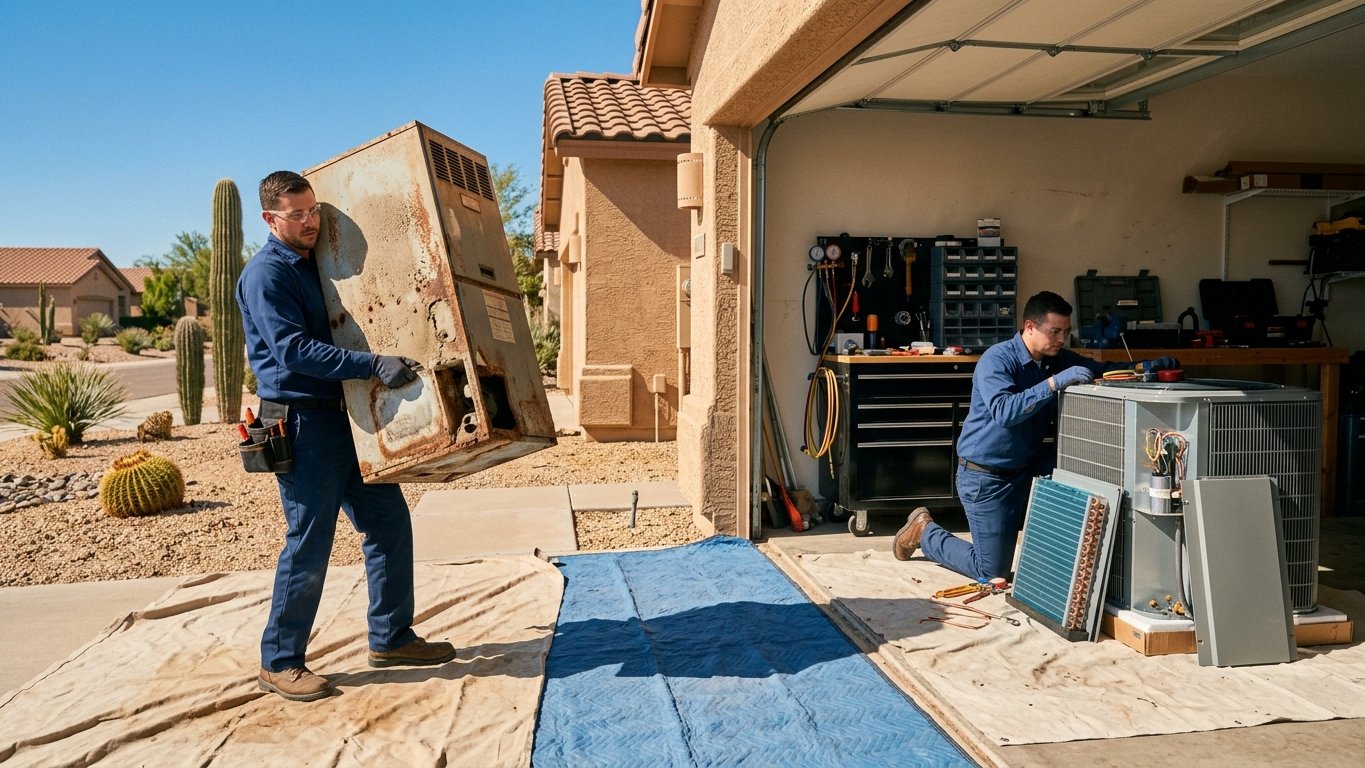
Replacing an HVAC system is a decision most Tucson homeowners make only once or twice, and getting it right matters because the equipment you choose will run thousands of hours a year through our long cooling season. A replacement is not just swapping one box for another — it is a chance to correct sizing mistakes, match the equipment properly, and fix the ductwork and connections that quietly drag down performance. We replace complete systems sized to your home and your real comfort needs.
Reading the signs that it’s time to replace
A few patterns point clearly toward replacement rather than another repair. Age is the first: a system well beyond its expected service life has parts wearing out faster than they can be fixed economically. Repeated repairs in a single season, especially expensive ones, signal a system in decline. A failed compressor on an older unit is often the deciding event, since the compressor is the most costly component to replace. Steadily rising energy bills with no change in usage suggest the equipment is losing efficiency. And any system still running phased-out R-22 refrigerant gets harder and more expensive to service every year, because that refrigerant is no longer produced. When the signs point to replacement, selecting an efficient central cooling system is the next step we walk through with you.
Doing the repair-versus-replace math honestly
Not every aging system needs replacing, and we will tell you when a repair is the smarter move. The calculation weighs the cost of the repair against the age and condition of the system, the price of the energy it wastes compared with newer equipment, and the likelihood of the next breakdown. A single affordable repair on an otherwise healthy unit is usually worth it. A major repair on equipment near the end of its life, or one that keeps the old inefficiency in place for years of high Tucson runtime, often costs more in the long run than replacing it. We lay out the numbers so the choice is yours.
Sizing the new system to your home
The biggest mistake in a replacement is assuming the new system should match the old tonnage. The previous unit may have been oversized by a hurried installer, or your home may have gained insulation, new windows, or shade since it went in. We run a load calculation that measures the actual cooling and heating demand of your house today. An oversized system short-cycles, fails to remove humidity, and wears its parts prematurely; an undersized one never catches up on a July afternoon. Right-sizing to the calculated load is the foundation of an efficient, comfortable replacement.
Installing a matched system and sound ductwork
Performance comes from the whole system working together, not from one high-rated component. We install a matched indoor and outdoor pair designed to operate as a unit, because mixing a new condenser with an old, mismatched coil sacrifices the efficiency you paid for. We also inspect the ductwork before the new equipment goes in, since leaky or undersized ducts can waste a large share of the system’s output before the air ever reaches your rooms. System replacement is one part of our broader whole-system HVAC work in Tucson, so duct repairs, electrical updates, and a thermostat upgrade can all be folded into the same project.
Handling disposal, permits, and verification
A complete replacement includes the parts that aren’t glamorous but matter. We recover and dispose of the old refrigerant responsibly, haul away the retired equipment, and pull the permits your jurisdiction requires so the work is inspected and documented. Once the new system is set, we make the refrigerant and electrical connections, evacuate and charge the lines to specification, and commission the equipment — verifying airflow, temperature split, and proper operation in every mode before we consider the job complete. The result is a system that performs to its rating from the first day, not one that merely turns on.
Choosing efficiency that fits your timeline
Once the decision to replace is made, the next question is how much efficiency to buy. Higher-rated equipment costs more upfront and uses less energy over its life, and in Tucson — where a system runs an enormous number of hours each year — the energy side of that equation carries more weight than it would in a milder climate. The right answer depends on how long you plan to stay in the home, how the system will be used, and how the monthly savings stack against the higher purchase price. We walk through those trade-offs honestly so you choose a system that matches both your home and your timeline, and we point you toward any current utility or federal incentives for qualifying high-efficiency equipment rather than promising specific dollar figures.
A replacement is a single-day or multi-day project that touches several systems in your home, and a careful contractor manages it so the disruption is brief and the result is durable. We protect floors and work areas, coordinate the timing so you’re without comfort for as little as possible, and keep the existing duct openings, electrical, and refrigerant lines in good condition or repair them where needed rather than forcing a new unit onto worn connections. Before we leave, we walk you through the new thermostat and controls, explain the maintenance that protects your warranty, and make sure you understand how the system you just invested in is meant to be operated through a demanding Tucson cooling season.
Call to schedule an in-home assessment and plan a right-sized HVAC system replacement.