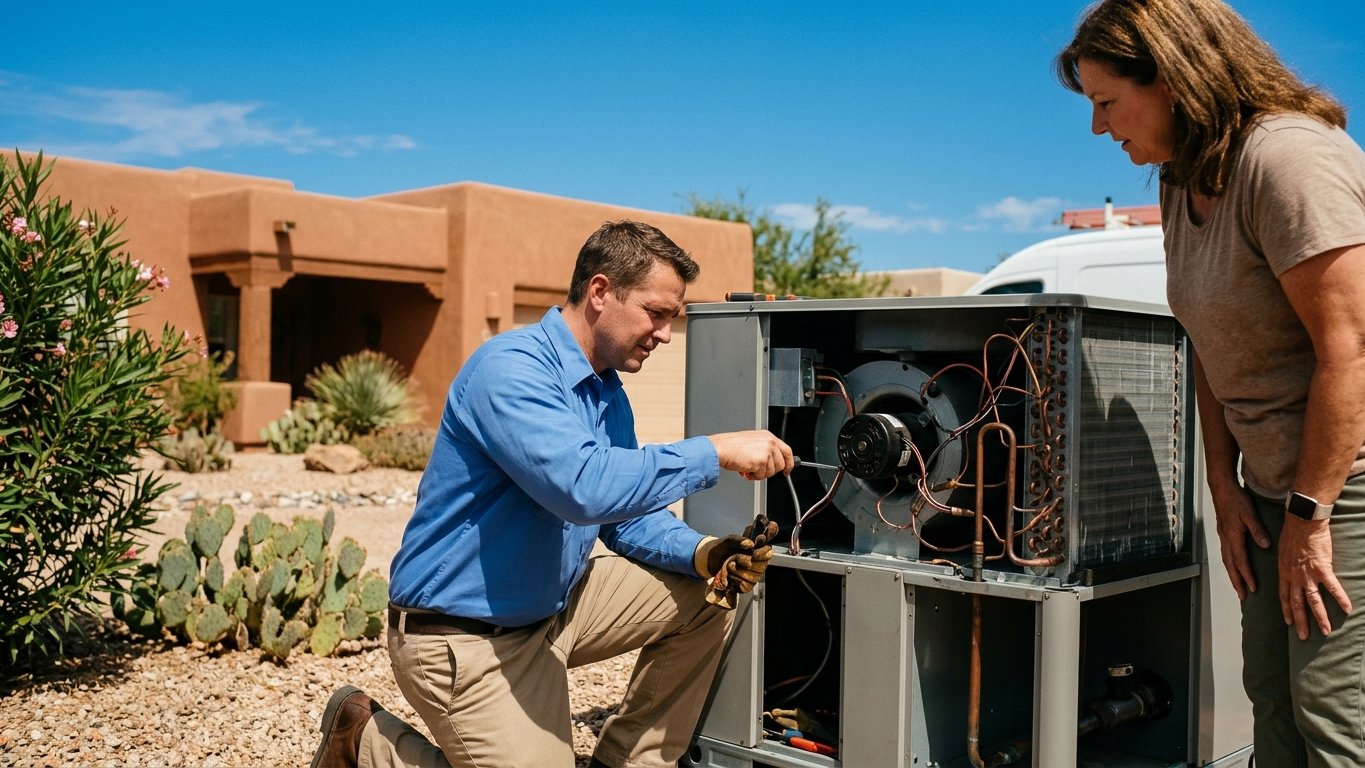
Package units are everywhere in Tucson, and for good reason: putting the entire heating and cooling system in one cabinet on the roof or beside the building saves space and simplifies the installation. The trade-off is exposure. That single cabinet sits in the full desert sun, takes the brunt of the summer heat, and collects the dust that blows across the valley, all of which take a toll. We repair and replace rooftop and ground-mounted package units, working with the specific stresses that the Tucson climate puts on this kind of equipment.
How a package unit works
A package unit is a self-contained system. Instead of splitting the components between an indoor air handler and an outdoor condenser, it combines the compressor, coils, blower, and heating section into one cabinet, then connects to the building through ductwork. That design comes in a few varieties: gas/electric packages pair an air conditioner with a gas furnace section for heating, electric packages use electric heat, and heat-pump packages reverse the refrigerant flow to both cool and heat from the same unit. Knowing which type you have shapes the diagnosis, since each has its own heating components and failure points alongside the shared cooling parts. The Department of Energy’s overview of split and packaged central air systems explains how this all-in-one design differs from the more common split system.
The faults we see most often
The components that fail in package units are the ones working hardest in the heat. Run capacitors and contactors, which switch and steady the electrical load, are frequent casualties of sustained high temperatures. Condenser fan motors wear out from constant runtime, and blower motors strain against dust-restricted airflow. Refrigerant leaks, failed sensors, and on gas/electric models ignition or heat-section faults round out the common list. We diagnose the actual failure rather than guessing, and we find and fix refrigerant leaks before recharging, because topping off a leaking system only wastes money and harms the environment. Package unit work is one part of our broader range of HVAC repair and installation in Tucson, so a single team covers both the fix and any eventual replacement.
Why rooftop location and sun exposure matter
The package unit’s location is central to how it fails and how it gets serviced. On a roof, the cabinet absorbs direct sun all day, pushing internal temperatures far above the already-high outdoor air and accelerating the breakdown of electrical components. The exposed condenser coil collects wind-blown dust that chokes airflow and forces the system to run hotter and longer to deliver the same cooling. Servicing the unit also requires safe roof access and the right approach for working at height. We account for all of this — the heat-stressed electronics, the dust-laden coils, and the access — when we diagnose and repair a rooftop package system.
Deciding between repair and replacement
When a package unit fails, the honest question is whether to fix it or replace it, and we lay out the math both ways. Most everyday faults — capacitors, contactors, fan motors, sensors — are straightforward repairs that get an otherwise sound unit running again, often the same visit. The calculus shifts toward replacement when the compressor fails on an aging unit, when repairs are stacking up across a season, or when the system still runs phased-out R-22 refrigerant that grows costlier to service each year. Because rooftop units endure such harsh conditions, their age and repair history carry real weight in the decision, and we factor in the energy a tired unit wastes through Tucson’s long cooling season.
What replacement involves when it’s the right call
When the math points to replacement, a package unit changeout has its own considerations beyond those of a split system. Because everything lives in one cabinet, the new unit needs to match the existing duct connections and the curb or pad it sits on, and a rooftop swap requires safely removing the old cabinet and setting the new one in place at height. We size the replacement to the building’s actual cooling and heating load rather than simply matching the old tonnage, since the previous unit may have been oversized or the building’s needs may have changed. We also confirm the gas, electric, or heat-pump configuration that best fits the property, recover the old refrigerant responsibly, and handle the permitting the work requires so the new unit is installed correctly from the start.
The harsh conditions that wear package units also make routine attention especially valuable. Because the cabinet sits exposed to sun and dust, its condenser coil clogs faster and its electrical components age quicker than shaded equipment, so periodic cleaning and testing pay off more here than almost anywhere. Keeping the coil clear, the capacitors and contactors checked, the refrigerant charge correct, and the filters changed on schedule helps the unit shed heat efficiently and reduces the odds of a midsummer failure. For a unit working as hard as a Tucson rooftop package system does, that kind of regular care is the difference between a long, reliable service life and a string of avoidable breakdowns.
Verifying the repair before we leave
A package unit repair isn’t finished when the unit restarts. We confirm the fix held by measuring the temperature split across the coil, checking refrigerant performance, verifying airflow, and running the unit through cooling and, where applicable, heating to be sure both modes work. On rooftop installations we make sure access panels are properly resealed against weather and dust before we come down. The point is to leave you with a package unit that is genuinely back to reliable operation, ready for the heat, rather than one that merely turned back on for the moment.
Call to schedule package unit repair or get a straight repair-versus-replace assessment for your rooftop system.