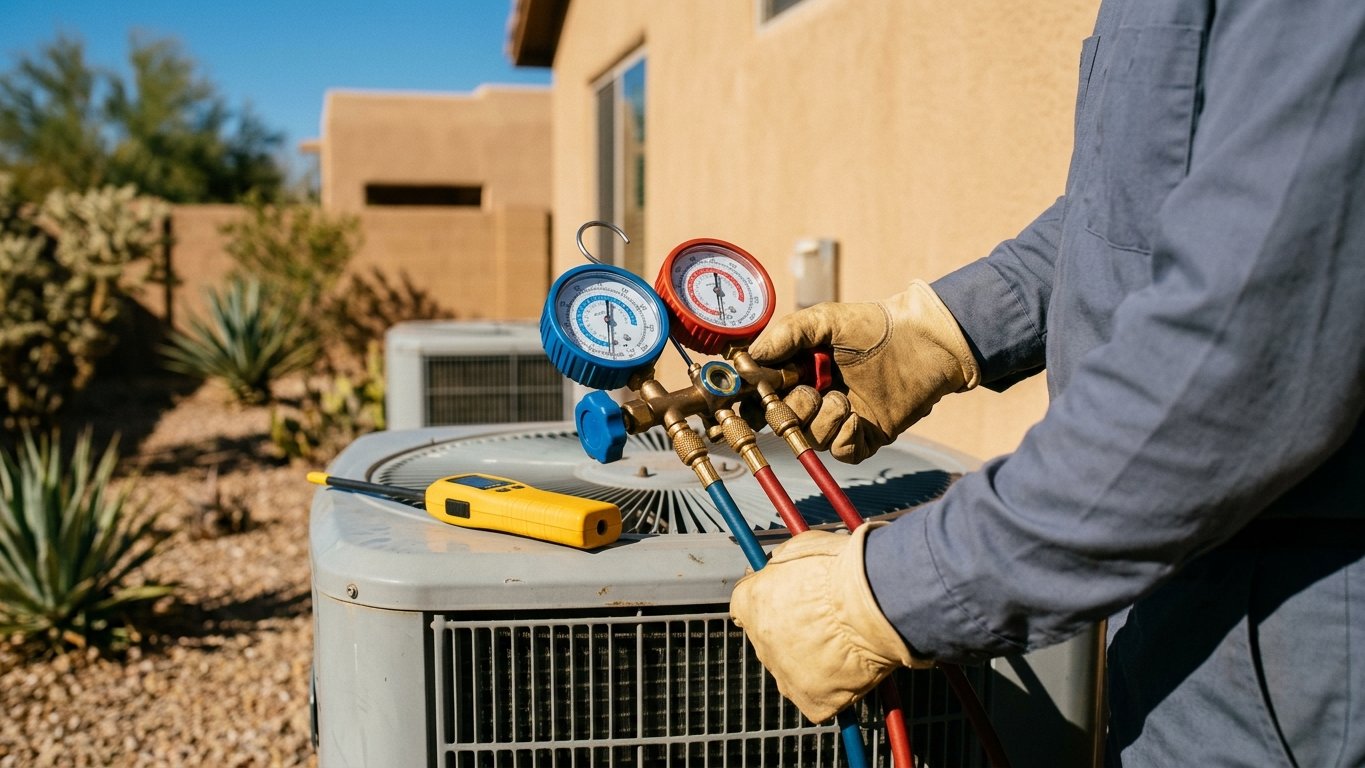
If your air conditioner is blowing weak or warm air on a brutal Tucson afternoon, low refrigerant is a frequent culprit, and it points to a problem many homeowners misunderstand. Refrigerant is not a fuel that gets used up. It moves through a sealed loop, absorbing heat indoors and releasing it outside, and under normal operation that charge should last the life of the system. So when a unit runs low, it has a leak, full stop. Our refrigerant leak repair service is built around that truth: we locate and seal the leak, then recharge the system to its proper specification, rather than pouring in refrigerant that will simply escape again.
How low refrigerant shows up in the Tucson heat
The symptoms tend to surface exactly when you need cooling most. You may notice the air from the vents feels lukewarm, or that the system runs constantly yet never reaches the thermostat setting once outdoor temperatures climb. A classic sign is ice or frost building on the copper suction line or the indoor evaporator coil, which happens because a low charge drops coil temperatures below freezing and pulls humidity out of the air to freeze on the metal. You might also hear a faint hissing or bubbling near the lines where refrigerant is escaping, and your electric bills often creep upward because the system labors longer to deliver less cooling. The U.S. Department of Energy notes that low refrigerant and AC leaks are among the most common reasons a unit fails to cool properly.
How we find the leak before adding any refrigerant
Finding a leak is detective work, because the loss point can be anywhere from the indoor coil to the line set to the outdoor condenser. Our technician inspects the accessible components, then uses leak detection methods suited to the system, which may include electronic leak detectors, an injected fluorescent dye traced under UV light, or a pressure test that isolates where the charge is escaping. Common leak sites include corroded coil tubing, loose or worn flare fittings, vibration-fatigued joints, and the Schrader valves at the service ports. Pinpointing the exact location matters, because it determines whether the fix is a simple fitting repair, a brazed joint, or a coil that has reached the end of its service life.
The size of the leak shapes the approach too. A large leak that drained the system quickly is often easier to locate and may sit at a single obvious joint or fitting. A slow leak that took a season or two to show up can be far harder to chase, sometimes hiding as a weeping pinhole that only reveals itself under pressure or with dye. Rather than rushing to add refrigerant and call it solved, we take the time to confirm where the charge is actually leaving. That patience is what lets us recommend a repair that holds, instead of one that sends you back to square one after the next heat wave drives the remaining charge out.
Why a top-off is the wrong fix
It can be tempting to ask for a quick recharge and get back to cooling, but topping off a leaking system is a false economy. The refrigerant you pay for leaks right back out, sometimes within weeks, so you end up calling again and paying again while the underlying problem grows. Beyond the cost, venting refrigerant into the atmosphere is environmentally harmful and, for several refrigerant types, restricted under federal rules that govern how technicians handle and reclaim it. Just as important, running an undercharged system forces the compressor to work against improper pressures, which generates excess heat and can trigger the very expensive failure described on our page covering full-service Tucson AC repair. Repairing first is cheaper than replacing a compressor that died from chronic low charge — and it reflects the standard our full-service Tucson AC repair team applies to every job.
R-410A, R-22, and recharging to spec
The refrigerant your system uses shapes both the repair and the recharge. Older units may still run on R-22, a refrigerant that has been phased out of production, which makes it increasingly scarce and costly and often tips the decision toward repairing the leak carefully or planning for replacement. Many newer systems use R-410A or a current alternative. Whatever the type, recharging is not a matter of “adding some and seeing how it cools.” After the leak is sealed, we evacuate the system and recharge it to the precise weight the manufacturer specifies for that equipment, because both an undercharge and an overcharge reduce efficiency, strain components, and shorten the life of the system. Measuring the charge by weight, not by guesswork, is what restores full, reliable cooling.
Preventing the next leak
Leaks are not always avoidable, but you can reduce their likelihood and catch them early. Keeping the outdoor unit clean and clear improves heat rejection and lowers operating pressures that stress fittings and coils. Scheduling a seasonal tune-up lets a technician inspect connections, check the charge, and spot corrosion or weeping joints before they become a no-cool emergency. If you have already had one leak repaired, watch for the early symptoms returning and call promptly, since acting on a small leak is far less disruptive than waiting for the system to fail in the middle of a heat wave. Early attention keeps your charge where it belongs and your compressor protected.
Call us the moment you suspect a leak, and we will find it, fix it, and recharge your system the right way.