Tucson HVAC resources
How Long Does an Air Conditioner Last in Tucson?
Updated 2026-05-15
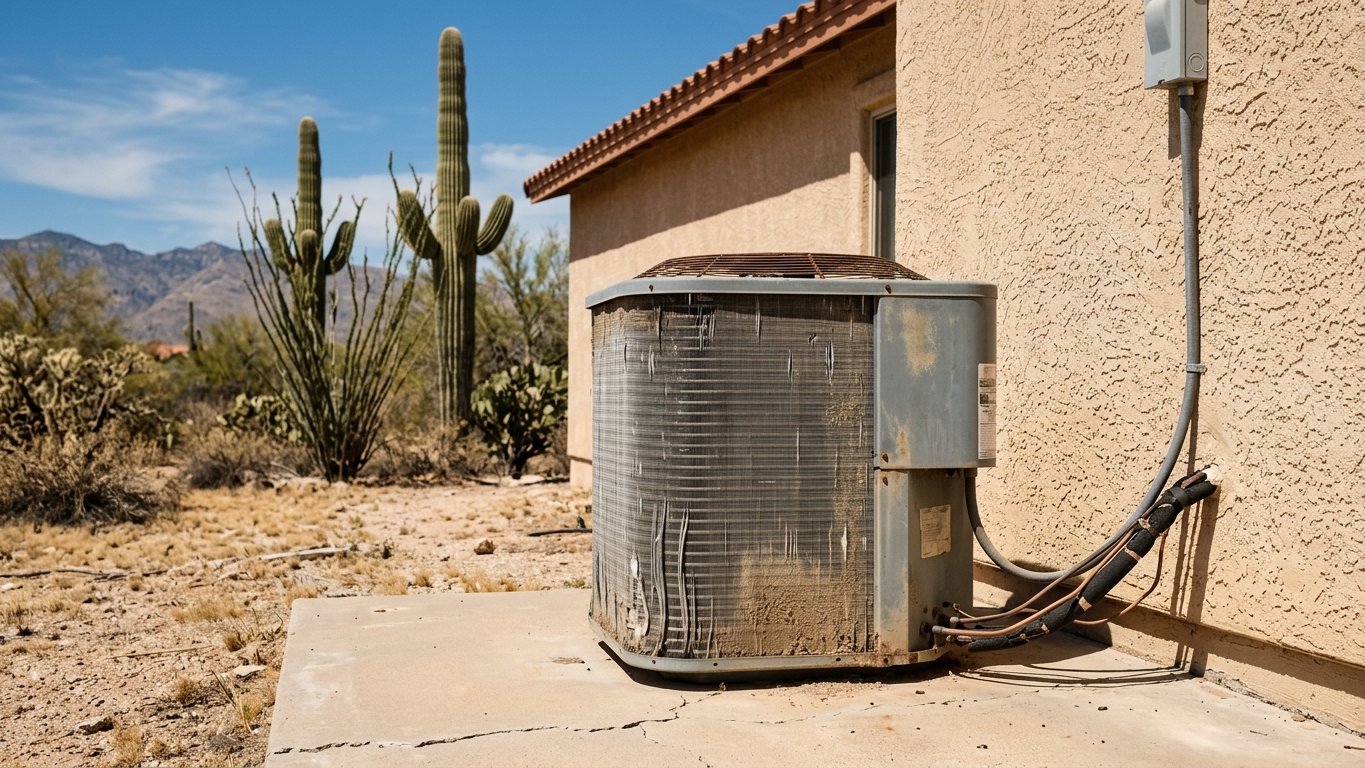
A new central air conditioner is a significant investment, so it is fair to ask how many summers you can expect from it before replacement becomes the smarter call. In most of the country the answer is 10 to 15 years. In Tucson, the honest answer is that you should plan toward the lower end of that range, because nothing wears an air conditioner like a Sonoran Desert summer.
Typical lifespan ranges and where Tucson units fall
Across the United States, a properly installed and maintained central AC system lasts roughly 10 to 15 years, and a heat pump often a year or two less because it works year-round. Those figures assume a moderate climate where the system rests for much of the year. Tucson does not offer that rest. From May through September, and often into October, your condenser and compressor run for hours every day against triple-digit heat. A system that might see 1,200 runtime hours a year in a mild climate can easily double that here, which is why local units frequently land at the 10-to-12-year mark rather than 14 or 15.
That is not a defect in the equipment. It is simply physics: more runtime hours means more wear on the compressor, more thermal cycling on electrical components, and more total hours of refrigerant under pressure.
It also helps to think in seasons rather than calendar years. A Tucson cooling season effectively runs from April or May into October, which is close to half the year of heavy, sustained operation. A homeowner in a four-season climate might run their compressor hard for only eight to ten weeks. By that measure, a Tucson air conditioner can rack up the equivalent lifetime wear of a milder-climate unit in noticeably fewer calendar years, which is the single biggest reason local expectations should be set realistically from day one.
Why desert heat is uniquely hard on cooling equipment
Several Tucson-specific stressors stack up to shorten lifespan. The first is sheer ambient temperature. An air conditioner rejects heat outdoors, and when the outdoor air is already 105 degrees or hotter, the condenser has to work much harder to shed heat. The compressor runs longer and hotter, and run capacitors, which are heat-sensitive by nature, degrade faster.
The second is dust and fine grit. Tucson’s blowing dust and monsoon-season debris coat condenser coils, and a dirty coil cannot release heat efficiently, forcing the whole system to labor. The third is monsoon humidity spikes and power fluctuations during summer storms, which add electrical stress. Together these factors mean a Tucson AC simply lives a harder life than the same model installed in San Diego or Denver.
Warning signs your system is nearing the end
A declining air conditioner usually warns you before it quits entirely. Rising energy bills with no change in habits often signal a system losing efficiency. Rooms that no longer cool evenly, or a unit that runs nonstop and still cannot hit the thermostat setting on the hottest afternoons, point to a system past its prime. Frequent repairs in consecutive seasons, unusual noises like grinding or rattling, and moisture or refrigerant issues are all red flags. If your unit is more than a decade old and showing several of these signs at once, you are likely looking at the final stretch of its service life and should start planning an AC replacement in Tucson before it fails during a heat wave.
Repair versus replace: how to decide
When a major component fails on an aging system, the math matters. A widely used rule of thumb is to multiply the age of the unit by the repair cost; if that number is high, replacement usually wins. More practically, if a repair approaches half the cost of a new system, or if your unit is over ten years old and the compressor or coil is failing, replacement is generally the better long-term decision. A newer, efficient system also cools more cheaply, which matters enormously when you run it five months a year.
There is also a comfort and reliability angle that pure cost math misses. An aging system that limps through one more summer with a patched-up compressor or a borderline refrigerant charge is far more likely to fail on the hottest day of the year, when demand is highest and emergency service is hardest to schedule. Replacing proactively, in the spring shoulder season, means you choose the equipment, schedule the install on a comfortable day, and avoid the premium and stress of an emergency swap in July. For many Tucson homeowners, that predictability is worth as much as the dollar savings.
How efficiency ratings change the replacement equation
Air conditioner efficiency is measured by SEER2 (the updated Seasonal Energy Efficiency Ratio), and the numbers have climbed considerably over the past 15 years. A system installed in the mid-2000s might carry a rating in the low double digits, while modern systems are substantially more efficient. In a mild climate that gap is a minor line item. In Tucson, where the compressor runs for thousands of hours each summer, even a few points of efficiency translate into meaningful savings on every cooling bill from May through September. That is why a 12- or 13-year-old Tucson system can sometimes justify replacement on energy savings alone, even before a major part fails. When you are weighing whether to nurse an old unit along, factor in what a more efficient replacement would shave off five months of peak-season electricity use, not just the avoided repair.
How maintenance genuinely extends AC life
Maintenance is the single biggest lever you control. Replacing or cleaning filters monthly during cooling season keeps airflow strong and prevents the frozen coils and strained blower motors that kill systems early. An annual professional tune-up before summer catches a weakening capacitor, a low refrigerant charge, or a dirty coil while these are cheap fixes rather than emergency failures. Keeping the outdoor condenser clear of dust, weeds, and debris lets it shed heat properly. The Department of Energy’s guidance on routine air conditioner maintenance confirms that consistent upkeep preserves both efficiency and equipment life. In Tucson, where the equipment works so hard, that upkeep is not optional if you want to reach the upper end of the lifespan range.
The R-22 factor for older systems
There is one more reason older Tucson systems are reaching the end of their practical life: refrigerant. Air conditioners manufactured before 2010 generally use R-22 refrigerant, which has been phased out of production in the United States. If an older R-22 system develops a refrigerant leak, recharging it has become expensive and increasingly impractical because supply is limited and prices have climbed sharply. For many homeowners with a leaking R-22 unit, replacement with a modern refrigerant system is the financially sensible path rather than pouring money into obsolete equipment.
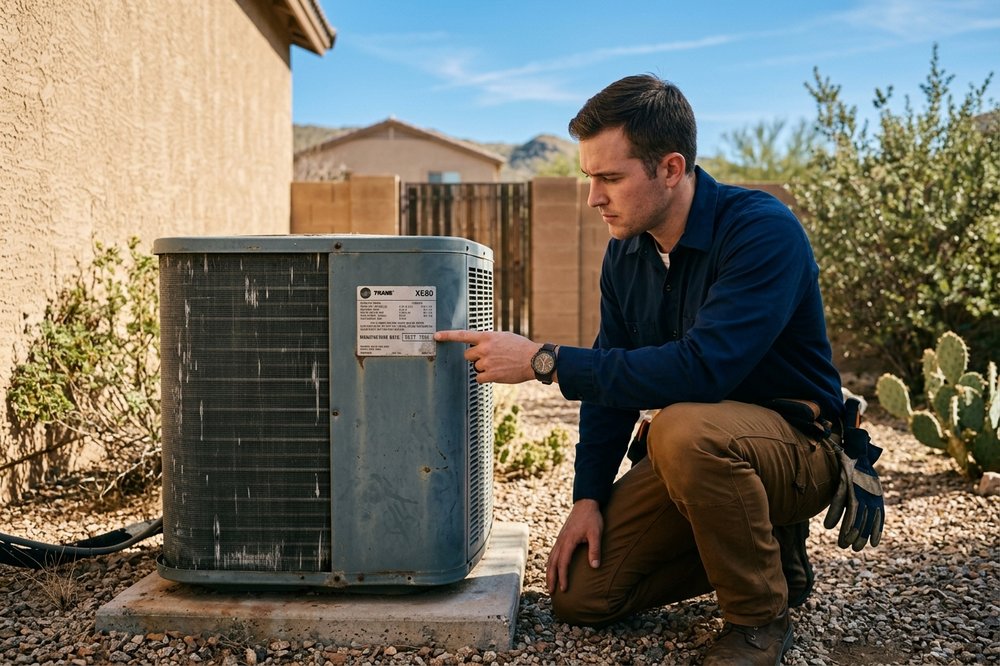
This is worth checking proactively rather than waiting for a failure. The age of your equipment is usually printed on the data plate of the outdoor condenser, and the refrigerant type is listed there as well. If yours shows R-22 and the unit is well into its second decade, you are essentially running on borrowed time: the next significant leak or compressor issue will likely tip the decision toward replacement, because repairing obsolete equipment rarely pencils out. Knowing this in advance lets you budget and plan rather than being forced into a rushed, expensive decision during a breakdown.
Getting the most summers out of your AC
The realistic Tucson takeaway: expect 10 to 15 years, plan toward the lower end, and let maintenance push you toward the upper end. Keep filters clean, schedule a pre-summer tune-up, keep the condenser clear, and address small problems before they cascade into compressor failure. When your system does reach the point where repairs no longer make sense, replacing it on your own timeline, rather than during a 110-degree breakdown, is always the cheaper and far more comfortable choice. Call (520) 555-0123 to talk through where your system stands and what comes next.
Tucson AC questions, answered
What is the average lifespan of an air conditioner in Tucson?
Most central air conditioners last 10 to 15 years, but in Tucson the realistic figure trends toward the lower end of that range. Our systems run for months at a time against 100-plus-degree heat, so components accumulate far more runtime hours per year than units in milder climates. With consistent maintenance, a well-installed system can still reach the upper end.
Is it worth repairing a 12-year-old AC unit in the desert?
It depends on the repair cost and the part that failed. A common guideline is to replace rather than repair when the repair exceeds about half the cost of a new system, or when an aging unit needs major work like a compressor. In Tucson, a 12-year-old unit is already near typical end-of-life, so weigh repair against efficiency gains from a newer system.
Does running my AC constantly in summer shorten its life?
Continuous runtime does add wear, but short-cycling and poor maintenance damage a system faster than steady operation. The bigger lifespan threats in Tucson are dirty coils, clogged filters that strangle airflow, and a unit that is undersized or oversized for the home. Steady, well-maintained cooling is healthier for the equipment than frequent hard starts.