Tucson HVAC resources
Why Is My Air Conditioner Freezing Up?
Updated 2026-05-15
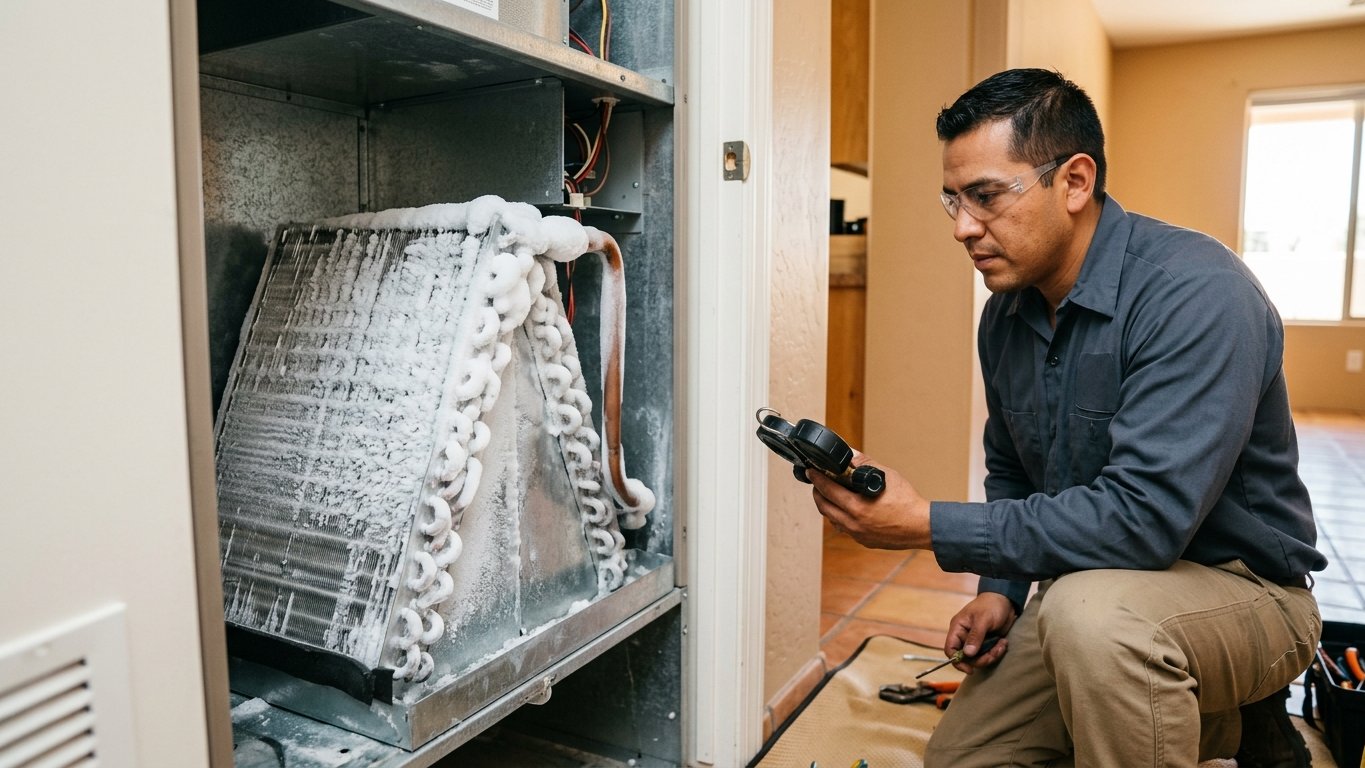
It is one of the most counterintuitive air conditioning problems a Tucson homeowner runs into: the air outside is 105 degrees, yet the indoor unit is encased in ice and the house is getting warmer. A frozen air conditioner seems impossible in desert heat, but it is actually common here, and the cause is almost never the weather. Understanding why it happens helps you stop the damage and get cooling back fast.
How a frozen coil actually forms
The ice forms on the indoor evaporator coil, the part of your system that absorbs heat from your home’s air. Refrigerant inside that coil is very cold, and warm indoor air blowing across it normally keeps the coil temperature above freezing while it does its job. When something interrupts that balance, the coil surface drops below 32 degrees, the moisture condensing on it turns to frost, and the frost builds into a thick layer of ice. That ice then blocks airflow even more, which makes the coil colder still, so a small problem snowballs into a fully frozen block within hours.
The real causes behind a frozen AC
Almost every frozen coil traces back to one of two root issues: restricted airflow or low refrigerant.
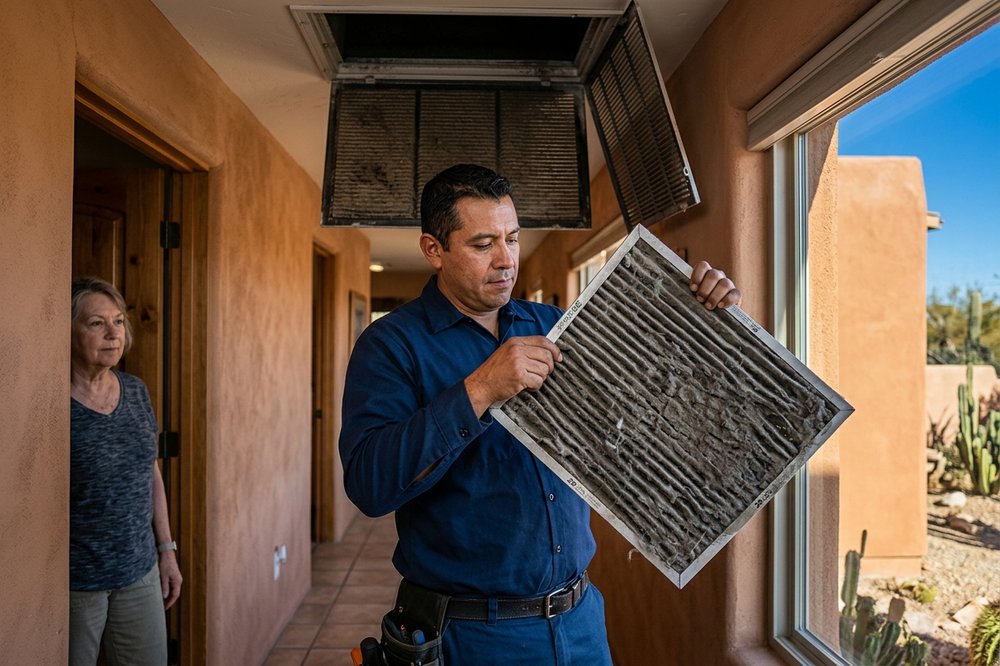
Restricted airflow is the most frequent culprit, and it usually starts with a dirty air filter. In Tucson’s dusty climate, filters clog faster than the packaging suggests, and a choked filter starves the coil of the warm air it needs. Closed or blocked supply vents, a dirty blower wheel, a failing blower motor, or even closing too many room registers can produce the same airflow shortage. Dirty evaporator coils caked with dust also insulate the coil and contribute to freezing.
Low refrigerant is the other major cause, and it almost always means a leak. When the refrigerant charge drops, the pressure in the coil falls, the temperature drops below freezing, and ice forms even on a hot day. The Department of Energy notes that common air conditioner problems such as low refrigerant frequently stem from leaks rather than refrigerant being “used up,” so simply adding more without finding the leak is a temporary fix at best.
A few less obvious causes round out the list. A failing blower motor or a slipping blower wheel cannot push enough air across the coil, producing the same effect as a clogged filter. A stuck or failing thermostat that calls for cooling far longer than necessary can drive the coil too cold. And dirty, undersized, or partially collapsed ductwork limits return airflow in ways that are easy to overlook. In older Tucson homes with original ducts, restricted return air is a surprisingly common hidden contributor to repeat freezing.
How to tell airflow from refrigerant as the cause
You can often narrow down the cause yourself before calling for service. If the ice clears after you swap a dirty filter and open all the vents, and the system then cools normally for days, airflow was almost certainly the problem. If you have a clean filter, open vents, and the coil still freezes within a few hours of running, suspect refrigerant. Another clue: a refrigerant leak frequently produces weak cooling and a hissing or bubbling sound near the lines, and the larger copper line at the outdoor unit may frost over. Airflow problems, by contrast, usually come with visibly dirty filters or weak air from the registers. This is a useful distinction because a refrigerant leak requires a licensed technician, while an airflow fix is often something you can resolve yourself.
Why this happens so readily in Tucson
Desert conditions make freezing more likely, not less. The dust load here clogs filters and coats coils quickly, so airflow restrictions develop faster than in cleaner climates. Systems also run for extremely long stretches in summer, which means any small refrigerant leak or airflow problem has hours every day to push the coil into a freeze. And because homeowners crank thermostats very low to fight the heat, the system runs harder against whatever restriction already exists. The intense demand does not cause freezing on its own, but it accelerates whatever underlying problem is present.
There is also a nighttime version of this problem that catches Tucson homeowners off guard. When outdoor temperatures finally drop in the early morning hours, the cooling load on the home falls, but if the thermostat is still calling for aggressive cooling, the coil can get colder than it needs to and tip into freezing. Setting a reasonable overnight temperature instead of an extremely low one not only saves energy but reduces the odds of waking up to an iced-over system and a house that is heating up just as the day’s heat arrives.
What to do the moment you spot ice
Take these steps right away to limit damage. First, turn the cooling off at the thermostat but switch the fan to “on.” Running the fan without cooling pushes warm indoor air across the coil and melts the ice faster. Do not keep running the system in cooling mode, because forcing a frozen unit can damage the compressor. Second, replace a dirty filter and open any closed or blocked vents to restore airflow. Third, lay towels around the indoor unit, since a melting coil sheds water that can overflow the drain pan. Once the coil is fully thawed, usually within one to three hours, you can try cooling again and watch whether ice returns.
Why running a frozen AC is dangerous for the system
It is tempting to leave the system running and hope it works through the ice, but that is the worst thing you can do. When the coil is iced over, liquid refrigerant that should have evaporated can return to the compressor, a condition that batters the compressor’s internal components. The compressor is the single most expensive part of your air conditioner, so what began as a five-dollar filter problem can turn into a repair that costs as much as a new system. Shutting the unit down at the first sign of ice protects that investment.
There is a secondary risk too. As a thick layer of ice melts, it can release more water than the condensate drain pan was designed to handle at once. In a system with a slow or partially clogged drain line, common in Tucson where dust and mineral buildup accumulate in condensate lines, that overflow can spill onto a furnace, ceiling, or attic floor and cause water damage that costs far more than the original AC repair. This is exactly why turning the system off and managing the thaw deliberately, with towels in place, matters as much for your home as it does for the equipment.
When you need a professional and how to prevent a repeat
If the coil freezes again after you have replaced the filter and opened the vents, the cause is deeper, typically a refrigerant leak, a dirty coil that needs cleaning, or a blower problem. At that point you need professional evaporator coil repair to find and fix the root cause rather than chasing symptoms. A technician will pinpoint whether the issue is charge, airflow, or a failing component, and a refrigerant leak in particular requires leak detection and a proper repair, not just a top-off, because the leaked refrigerant will only escape again.
Prevention is straightforward and pays for itself quickly in Tucson. Change filters monthly during cooling season, since our dust load clogs them far faster than the package estimate suggests. Keep all supply vents open and unobstructed, and resist the urge to close off rooms, which starves the system of return air. Keep the area around the indoor unit and the condensate drain clear. Most importantly, schedule an annual tune-up before summer so a technician can clean the evaporator coil, flush the condensate line, verify the refrigerant charge, and check blower performance while the weather is still mild. Those small habits are what keep your coil clear and your home cool through the worst of the heat. If your AC is icing over now, call (520) 555-0123 and we will diagnose why.
Tucson AC questions, answered
Why does my AC freeze up when it is over 100 degrees outside?
It feels backward, but freezing has nothing to do with outdoor temperature. Ice forms on the indoor evaporator coil when something starves it of warm airflow or drops the pressure too low, usually a dirty filter, blocked vents, or low refrigerant. The coil gets cold enough that the moisture on it freezes, and the ice then blocks airflow further, making the problem worse.
Can I just turn my frozen AC back on after the ice melts?
You can turn it back on once it is fully thawed and you have replaced a dirty filter and opened all vents, but if it freezes again the underlying cause is still there. Repeated freezing points to low refrigerant or an airflow problem that needs diagnosis. Running a system that keeps icing over risks expensive compressor damage, so do not ignore a repeat freeze.
How long does it take a frozen AC coil to thaw in Tucson?
With the cooling off and the fan running, a frozen coil usually thaws within one to three hours, depending on how much ice built up. In Tucson's heat the thaw can be faster. Set the thermostat to off and the fan to on to push warm indoor air across the coil. Have towels ready, because melting ice produces water that can overflow the drain pan.